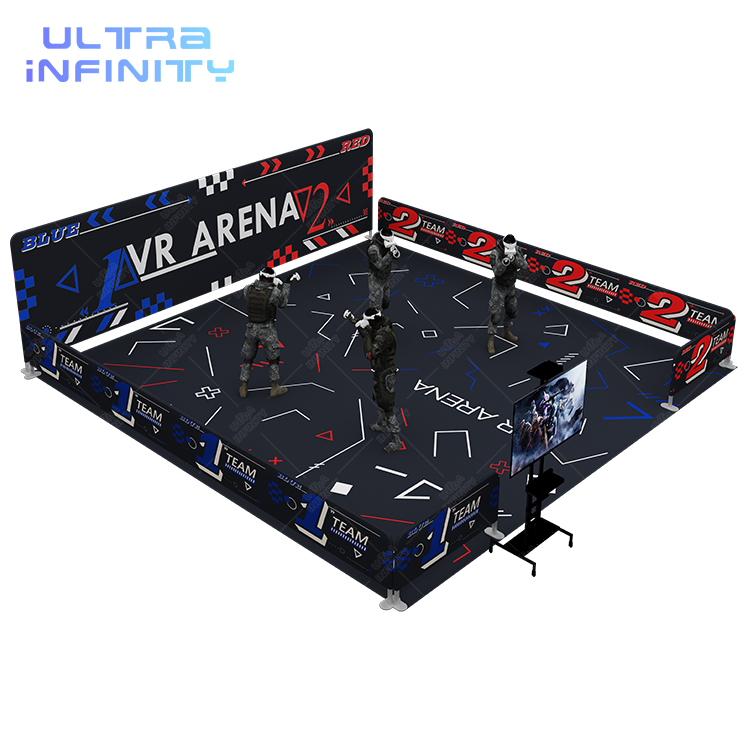
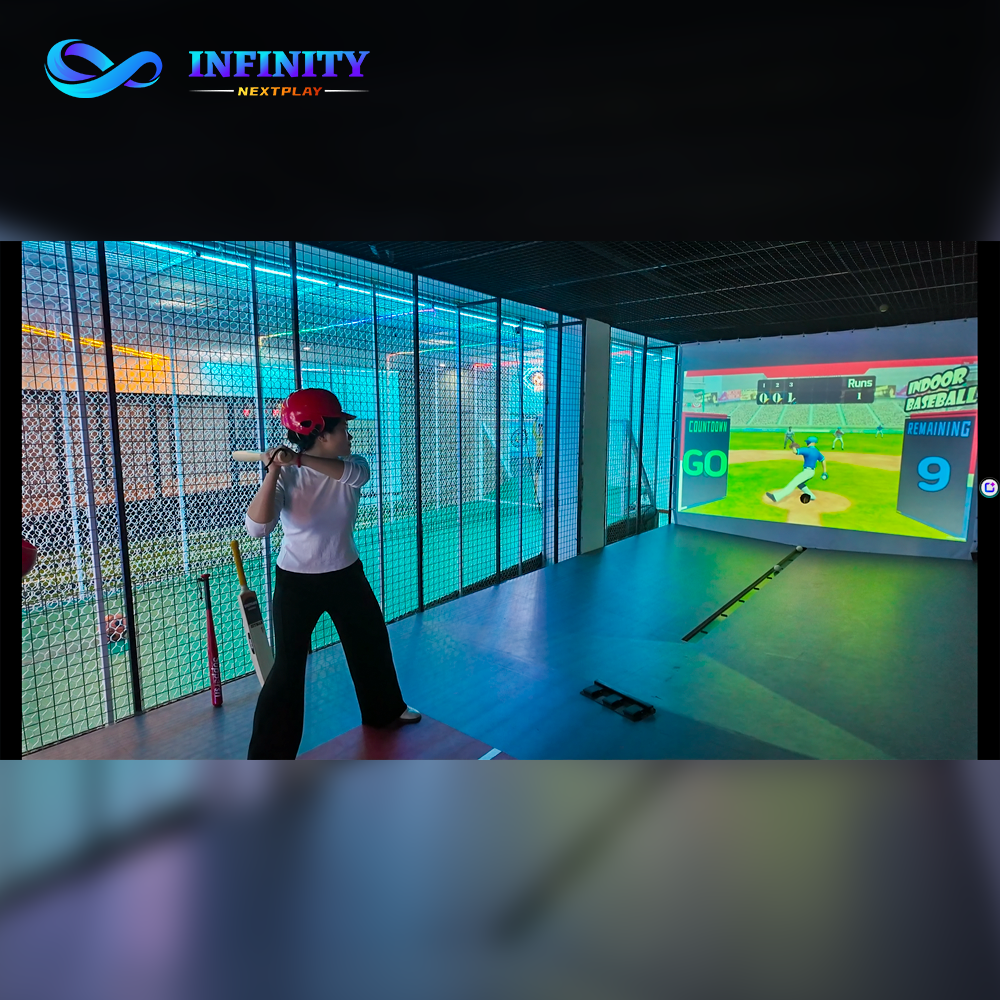
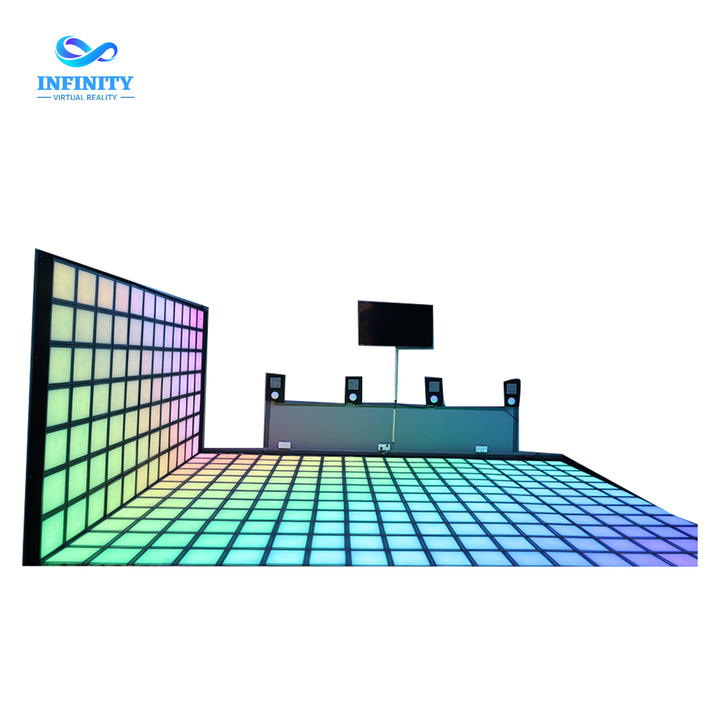
The following equipment units form the primary revenue-generating hardware for the commercial venue described in this guide.
Explore the equipment referenced throughout this guide: Free Roaming VR Arena 2.0 - Multiplayer VR Walking Shooting Simulator Immersive Indoor Baseball Batting Simulator - Real-time Ball Tracking & HD Projection - Perfect for Competitive Entertainment Venues Infinity Grid LED Dance Floor Game, Interactive Light up Jumping Tiles for Party Room & Event Rental, Multiplayer Challenge Game. Each unit is engineered for commercial-grade reliability and backed by full factory support.
Virtual reality has evolved from a novelty attraction to a core revenue driver in family entertainment centers. The global commercial VR market is projected to reach $12.6 billion by 2028, growing at 32.8 percent CAGR. For FEC operators, VR offers a unique advantage: premium pricing power. Customers are willing to pay $12-$25 per session for high-quality VR experiences, which is 2-3x the price of traditional arcade games. The key success factor is selecting the right VR equipment mix for your specific venue size, target demographic, and revenue goals.
Market Size: $12.6B by 2028; Growth Rate: 32.8% CAGR; Session Price: $12-$25; Price Premium: 2-3x traditional arcades; Customer Willingness: High for quality VR
Free-roam VR arenas represent the premium tier of commercial VR experiences. Players wear wireless headsets and backpack PCs, allowing them to walk freely through a large physical space while exploring virtual environments. This technology delivers the most immersive VR experience available and commands the highest session prices. A free-roam arena requires a minimum of 6m x 6m of dedicated space and supports 2-12 players simultaneously. The investment ranges from $35,000 to $80,000 depending on the number of players and the physical space buildout. The expected payback period is 10-16 months.
Investment: $35K-$80K; Space: 6m x 6m minimum; Players: 2-12 simultaneous; Session Price: $18-$25; Payback: 10-16 months; Revenue per Hour: $120-$300
Stationary VR pods are the most space-efficient commercial VR solution. Each pod consists of a VR headset, motion platform, and dedicated play area within a compact enclosure. Pods can be placed side by side to create a VR zone with minimal floor space requirements. This format is ideal for venues with limited space or as a supplementary attraction alongside other entertainment options. A single VR pod costs $12,000-$25,000 and requires approximately 2.5m x 2.5m of floor space.
Investment: $12K-$25K per pod; Space: 2.5m x 2.5m; Players: 1-2 per pod; Session Price: $10-$18; Payback: 8-14 months; Scalability: Add pods incrementally
VR motion chairs combine a motorized seating platform with a VR headset to create immersive simulation experiences. These systems are particularly effective for roller coaster simulations, flight experiences, and racing games. The motion platform adds a physical sensation dimension that headset-only experiences cannot match. A VR motion chair costs $8,000-$18,000 per unit and requires minimal space: 2m x 2m per chair. The compact footprint and high visual impact make motion chairs excellent attraction anchors near venue entrances.
Investment: $8K-$18K per chair; Space: 2m x 2m; Players: 1 per chair; Session Price: $8-$15; Payback: 7-12 months; Visual Impact: High (entrance anchor)
VR shooting galleries combine the physical act of aiming and firing a replica weapon with a virtual target environment. This format is highly popular because it is intuitive to play and creates strong competitive dynamics between players. Commercial VR shooting systems include specialized light guns with recoil feedback, large display screens or projection systems, and multiplayer scoring. The investment ranges from $15,000 to $35,000 per station with 2-4 player capacity.
Investment: $15K-$35K per station; Players: 2-4 per station; Session Price: $10-$20; Payback: 8-14 months; Competitive Multiplayer: Built-in leaderboards
VR racing simulators pair a full-motion racing cockpit with VR headsets for the ultimate driving experience. These systems attract a strong male 18-45 demographic and are particularly popular in venues targeting young adults. A professional-grade VR racing simulator costs $20,000-$45,000 and includes a motion platform, racing wheel and pedals, bucket seat, and VR headset. The space requirement is 3m x 2.5m per simulator.
Investment: $20K-$45K per unit; Space: 3m x 2.5m; Players: 1 per unit; Session Price: $12-$20; Payback: 10-16 months; Demographic: Strong 18-45 male appeal
VR escape rooms combine the puzzle-solving appeal of traditional escape rooms with the immersive environments of virtual reality. A VR escape room can accommodate 2-6 players and typically runs 20-30 minute sessions. The advantage over physical escape rooms is zero buildout cost for theme changes: new virtual environments can be loaded through software updates. The investment is primarily in the headsets and tracking system, ranging from $20,000 to $50,000 for a complete setup.
Investment: $20K-$50K for full setup; Players: 2-6 per session; Session Duration: 20-30 minutes; Session Price: $15-$25 per person; Theme Updates: Software-based, zero physical cost
Child-friendly VR experiences use simplified controls, shorter sessions, and age-appropriate content designed for children aged 6-12. These systems typically feature seated experiences with limited motion to ensure safety and comfort for younger users. The content library should include educational adventures, gentle games, and interactive stories. A child VR pod costs $8,000-$15,000 and is designed with enhanced safety features including parental monitoring screens.
Investment: $8K-$15K; Age Range: 6-12 years; Session Duration: 5-15 minutes; Session Price: $6-$12; Safety: Enhanced parental monitoring; Content: Educational and entertainment
The optimal VR equipment mix depends on three factors: available floor space, target demographic, and budget. For venues under 500 square meters, prioritize stationary VR pods and motion chairs for maximum revenue per square meter. For venues over 800 square meters, invest in at least one free-roam VR arena as the premium anchor attraction. For all venue sizes, include at least one competitive multiplayer VR option (shooting gallery or racing) to drive repeat visits through leaderboard competition.
Under 500 sqm: Pods + Motion Chairs; Over 800 sqm: Free-Roam Arena as anchor; All Sizes: Include competitive multiplayer; Budget Allocation: 40-60% of entertainment budget for VR
Commercial VR equipment typically delivers ROI within 8-16 months depending on the equipment type and venue utilization. Free-roam VR arenas generate the highest absolute revenue but require the largest upfront investment. VR motion chairs deliver the fastest ROI due to low cost, small footprint, and high throughput. The key metric to track is revenue per square meter per hour: VR equipment should generate $3.50-$6.00 per square meter per hour at full utilization.
Average ROI Timeline: 8-16 months; Revenue per sqm per hour: $3.50-$6.00; Utilization Target: 60-80% during operating hours; Maintenance Cost: 3-5% of equipment value annually
Commercial VR equipment requires regular maintenance to ensure optimal performance and customer satisfaction. Headsets need lens cleaning and hygiene maintenance after every session. Motion platforms require quarterly mechanical inspections. Software updates should be applied monthly to keep the content library fresh. Budget 3-5 percent of the equipment purchase price annually for maintenance and content updates. Most commercial VR systems have a useful life of 4-6 years before major hardware refresh is needed.
Maintenance Budget: 3-5% of equipment value annually; Headset Hygiene: After every session; Motion Platform: Quarterly inspection; Software Updates: Monthly; Hardware Refresh: 4-6 year cycle
The five most common mistakes are: buying consumer-grade equipment instead of commercial-grade (consumer headsets break within weeks of commercial use), choosing equipment based on personal preference rather than customer demand, underestimating the space requirements for free-roam systems, neglecting content library depth (the best hardware is useless without compelling content), and failing to budget for ongoing maintenance and content updates.
Mistake 1: Consumer vs commercial grade; Mistake 2: Personal preference vs demand; Mistake 3: Underestimating space; Mistake 4: Neglecting content library; Mistake 5: No maintenance budget
Q: What is the cheapest VR equipment to start with? A: VR motion chairs starting at $8,000 per unit. Q: How much space do I need for a VR zone? A: Minimum 20 square meters for 2-3 VR stations, 50+ square meters for a free-roam arena. Q: How often do VR headsets need replacement? A: Commercial headsets last 2-3 years with proper maintenance. Q: Can VR equipment be financed? A: Yes, most vendors offer leasing options starting at $300-$800 per month per unit.
See FAQ section above for details and answers to common questions.
| VR Type | Investment | Space | Session Price | Payback | Best For |
|---|---|---|---|---|---|
| Free-Roam Arena | $35K-$80K | 6m x 6m+ | $18-$25 | 10-16 mo | Premium anchor, large venues |
| Stationary VR Pod | $12K-$25K | 2.5m x 2.5m | $10-$18 | 8-14 mo | Space-limited venues |
| VR Motion Chair | $8K-$18K | 2m x 2m | $8-$15 | 7-12 mo | Fastest ROI, entrance anchor |
| VR Shooting Gallery | $15K-$35K | 3m x 3m | $10-$20 | 8-14 mo | Competitive multiplayer |
| VR Racing Simulator | $20K-$45K | 3m x 2.5m | $12-$20 | 10-16 mo | Young adult male demo |
| VR Escape Room | $20K-$50K | 5m x 5m | $15-$25 | 12-18 mo | Groups, repeat visits |
| Child VR Pod | $8K-$15K | 2m x 2m | $6-$12 | 7-11 mo | Family demographic |
Our team will recommend the optimal VR setup based on your space, budget, and target audience. Free consultation available.