


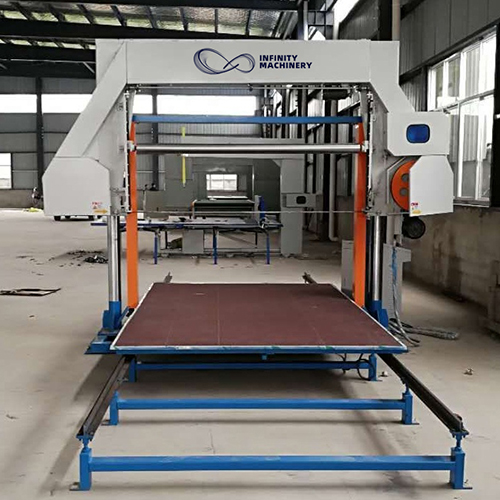
Flat comfort layers
Split a block horizontally into sheets. For orders that change thickness within a block, compare a reciprocating table with a long-track cutter. Compare horizontal cutters


Compare foam cutting machines by the part you need to make. A flat comfort layer starts with the full block width and finished sheet thickness. A square mattress core needs a straight edge through the full block height. For a contoured layer, the drawing also has to show which face carries the profile.
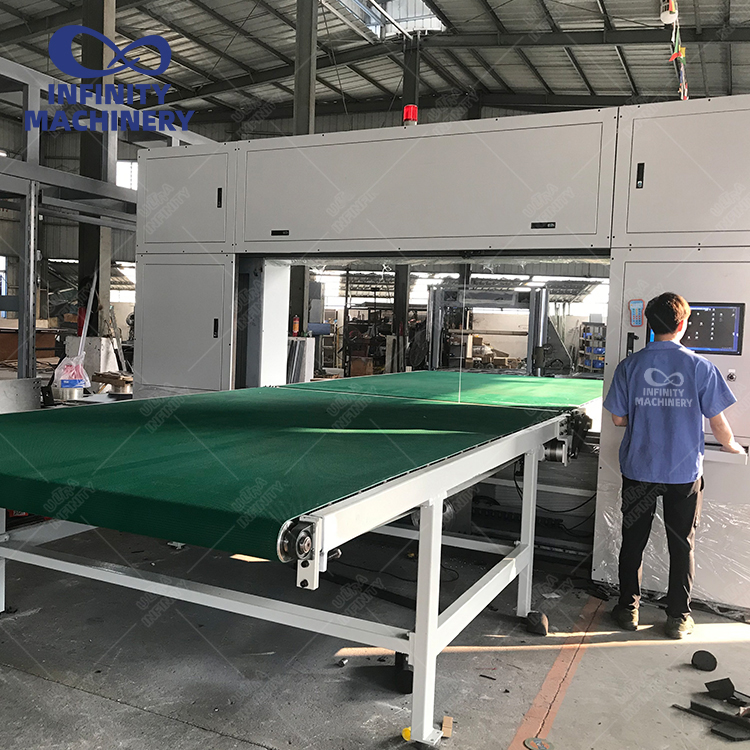
Split a block horizontally into sheets. For orders that change thickness within a block, compare a reciprocating table with a long-track cutter. Compare horizontal cutters
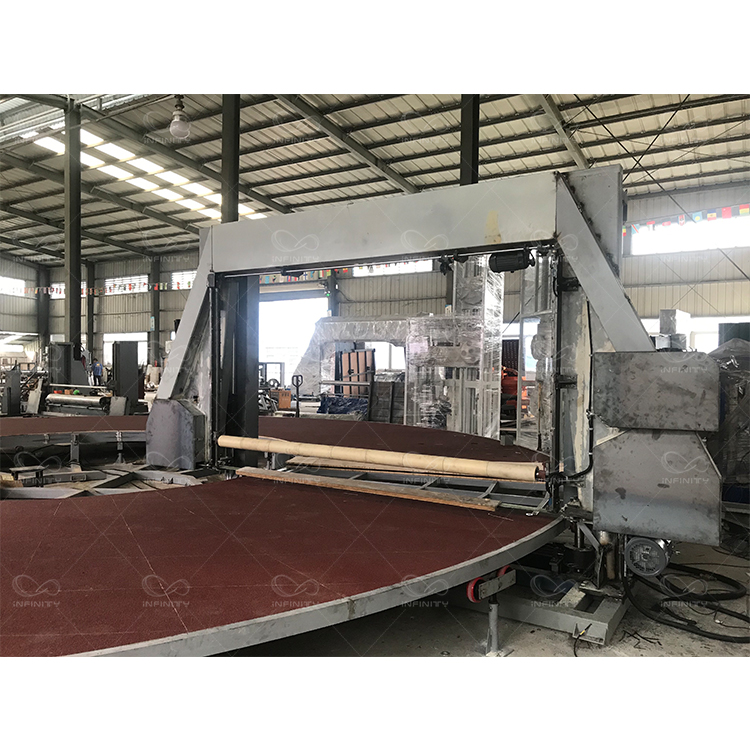
Several rectangular blocks ride on a rotating table. Check how many blocks of your usual size fit and how often a color or grade change leaves positions empty. Check carousel capacity
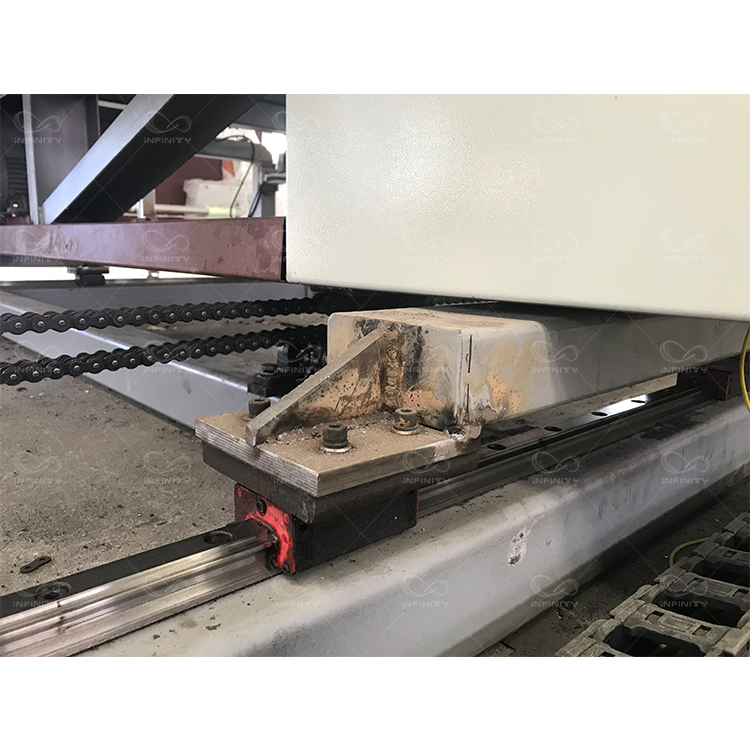
Trim the sides of a block, square a core or cut strips to width. Bring both your tallest block and your narrowest finished strip to the trial. Compare vertical cutters
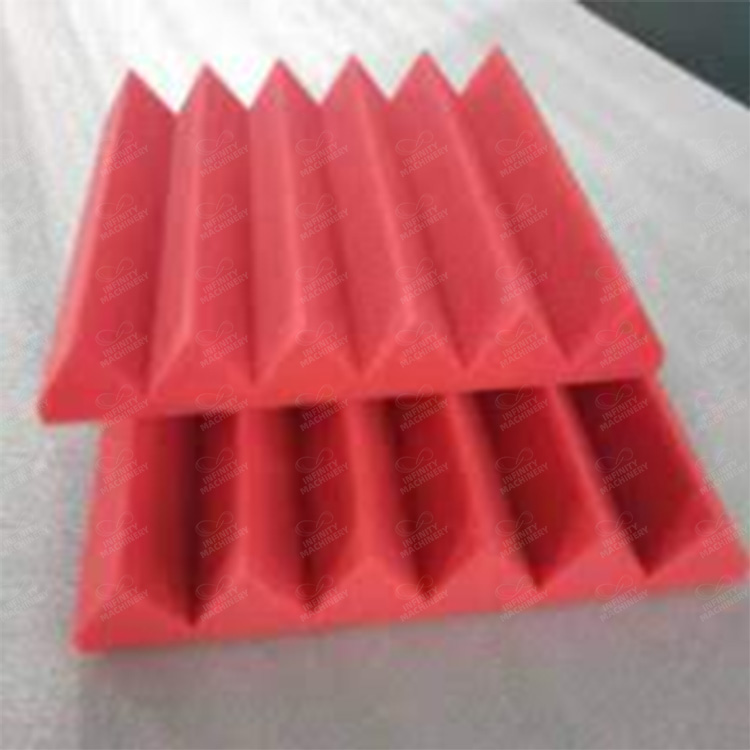
A wave in the side view and a radius in the top view call for different blade movements. Mark both views before choosing a CNC contour cutter. Compare CNC blade directions
Select a model to see its full specifications. The machines are grouped by the direction and shape of the cut.
IF-FPQ1-1650 / 2150
The table carries one block back and forth past the blade. Choose this setup when a single order calls for several layer thicknesses.
Block widths of 1650 or 2150 mm. Listed sheet thickness is 2–200 mm.
View product →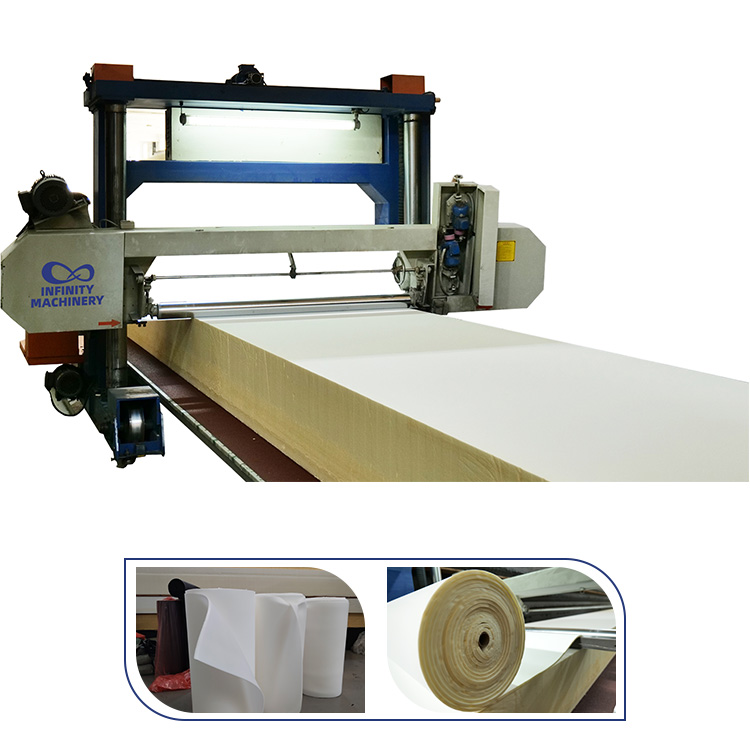 IF-LT1650 / 2450
Feed long blocks along a straight cutting run. Match the usable rail travel to your longest block and leave room to remove the sheet.
Cutting widths of 1650 or 2450 mm. Both sizes accept blocks up to 1350 mm high.
View product →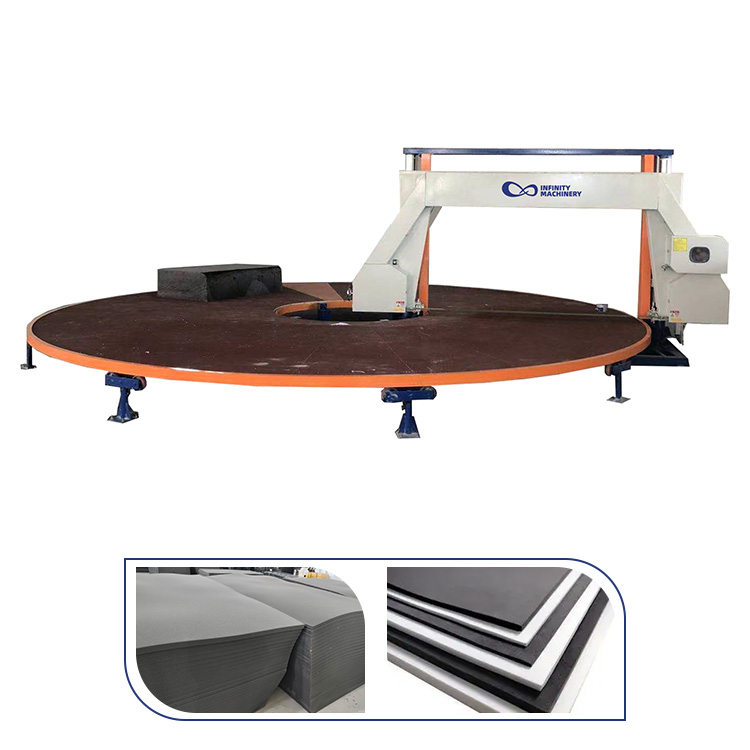 IF-FYP6 / 7 / 10
Run several blocks of the same grade and sheet thickness on a rotating table. Actual loading depends on the block footprint.
Three table diameters: 6, 7 and 10.5 m. Compare the three loading patterns below.
View product →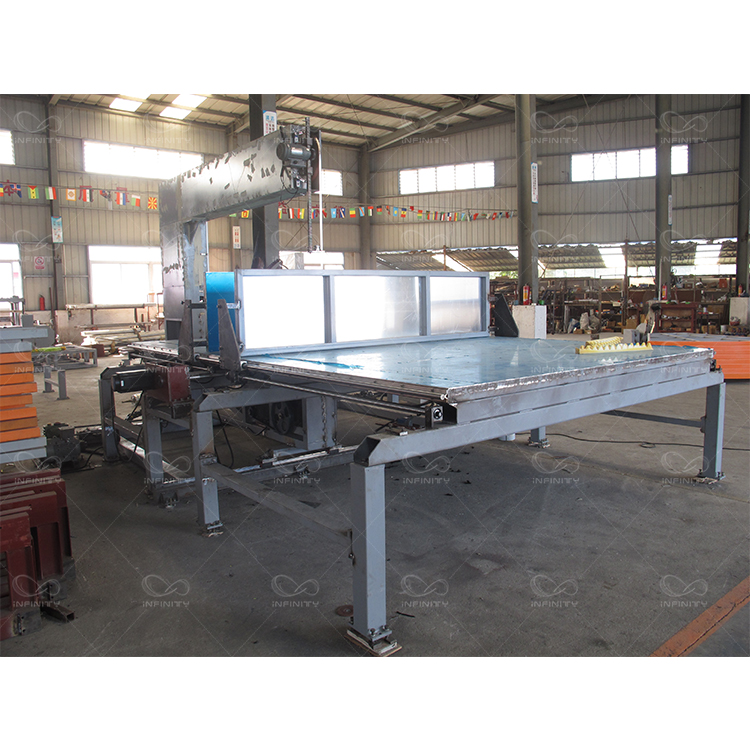 IF-FZQA
The reciprocating worktable and hold-down keep the block in position for straight cuts. Try the softest grade you run.
Release the hold-down, let the foam recover and check the width at three heights.
View product →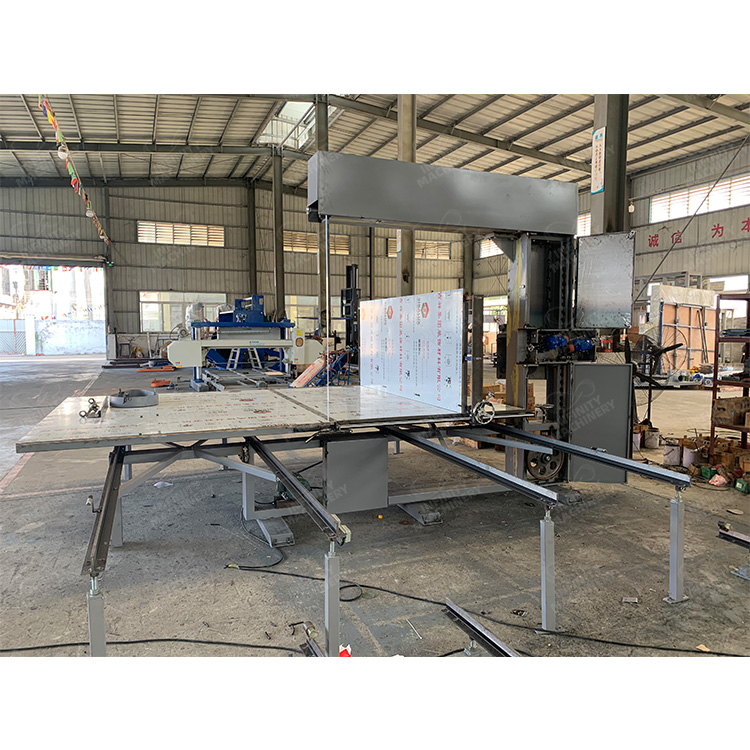 IF-FZQ3
Set several cutting thicknesses for jobs that mix wide and narrow strips. Check how the narrowest strip is supported at the exit.
Listed cutting height is 1100 mm. The inner and outer tables each measure 1700 × 2440 mm.
View product →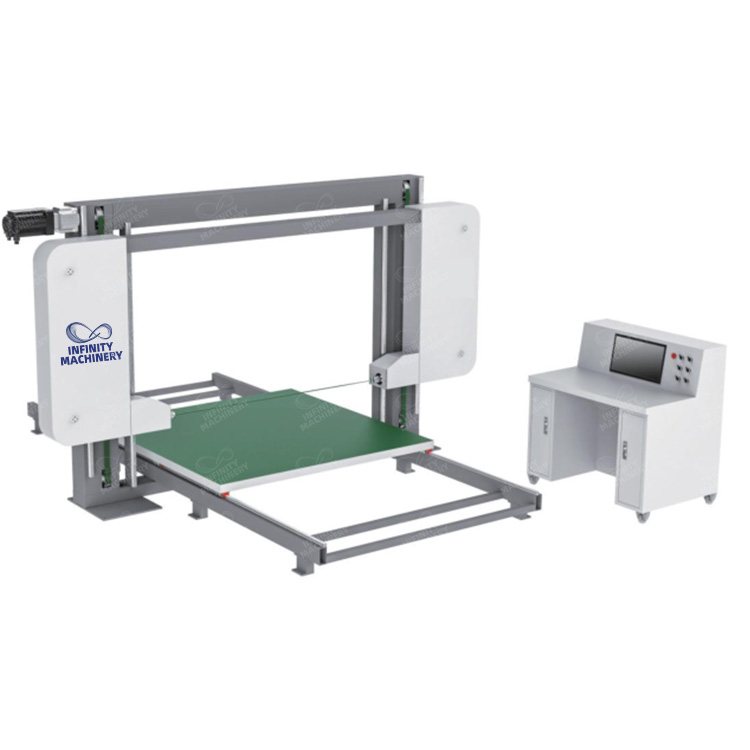 IF-CNCH
Follow a programmed profile through the foam. Send a side view showing the peaks, valleys and thinnest section of your part.
Maximum listed block size is 2000 × 2000 × 1200 mm (L × W × H).
View product →IF-CNCVH
Use horizontal and vertical blades for a part with profiles on two faces. Mark the cutting sequence and the faces that need to match.
Maximum listed block size is 2200 × 2000 × 1200 mm (L × W × H).
View product →Measure the largest untrimmed block that reaches the cutter. Two blocks with the same width may need different reciprocating tables because of their length. For a long-track machine, request the usable travel for the proposed installation.
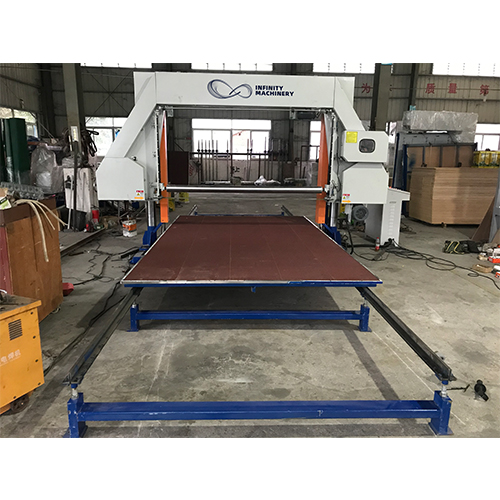
The table takes one block at a time. Compare all three block dimensions, then specify your thinnest and most frequent sheet sizes.
View this series →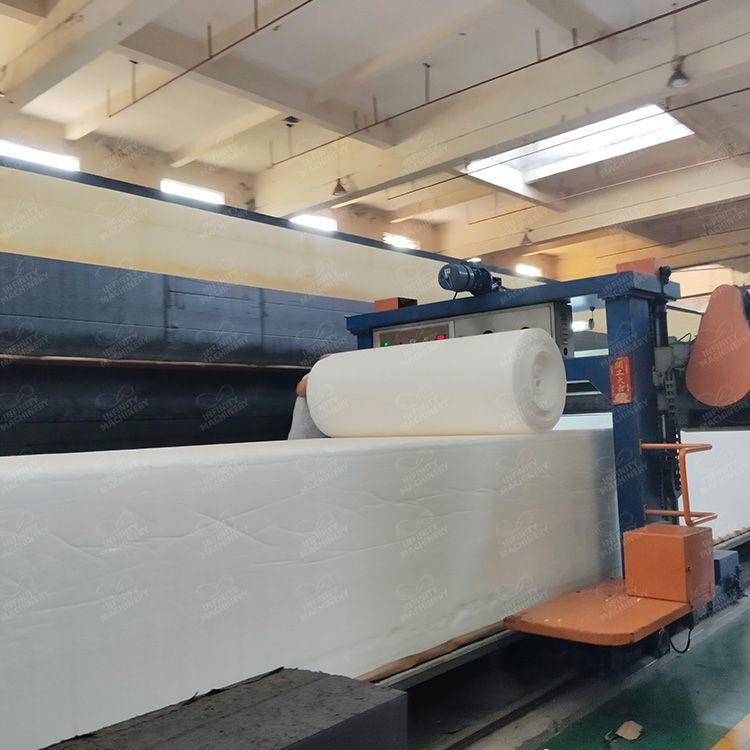
Screen on width and height first. Give the supplier your longest incoming block and the straight floor length available for rails and unloading.
View this series →| Model | Listed block dimensions | What to confirm |
|---|---|---|
| IF-FPQ1-1650 | 2000 × 1650 × 1200 mm (L × W × H) | Usual sheet thickness and thinnest layer |
| IF-FPQ1-2150 | 3000 × 2150 × 1200 mm (L × W × H) | Full length of your longest untrimmed block |
| IF-LT1650 | 1650 mm wide × 1350 mm high | Required rail travel and space at each end |
| IF-LT2450 | 2450 mm wide × 1350 mm high | Side clearance, travel and sheet removal |
Example. A block measuring 2300 × 2200 × 1100 mm is 50 mm too wide for the IF-FPQ1-2150. Of these four sizes, the IF-LT2450 meets the width and height requirement. Ask for the rail travel needed for the 2300 mm block.
The current IF-FPQ1 catalogue lists 2–200 mm sheets for both sizes. For a thin comfort layer, cut a full block of production foam and measure the first and last sheets after the agreed recovery time.
The IF-FYP carries rectangular blocks around a rotating table and slices a sheet from each block on successive passes. The table below gives the load for blocks measuring 2000 × 1500 × 1200 mm. If your blocks have a different footprint, ask for a loading drawing to suit.
See the IF-FYP series →| Model | Table diameter | Reference load | Machine footprint (L × W) |
|---|---|---|---|
| IF-FYP6 | 6 m | 4 blocks | 7 × 6.5 m |
| IF-FYP7 | 7 m | 5 blocks | 7.5 × 7 m |
| IF-FYP10 | 10.5 m | 8 blocks | 11.5 × 11 m |
All three sizes list a 2–150 mm sheet thickness range. If you batch by color or firmness, count how many matching blocks are ready when the table needs loading. A line that usually loads two blocks will have a different cost per sheet from one that fills the table.
Run a tall, soft block on the reciprocating table. Mark three points on the cut face. Release the hold-down, allow the agreed recovery time and measure at the top, middle and bottom. A change in width from one point to the next can reveal a tapered edge.
The listed cutting height is 1100 mm. The inner and outer tables each measure 1700 mm wide by 2440 mm long. Program the wide and narrow strips in one trial. Record the time to change size and whether the narrow strip has enough support as it leaves the blade.
Checking squareness. Measure both diagonals of a rectangular sample, then measure the width at each end. Keep the readings and a photograph of the measuring positions with the approved sample.
Mark a wave profile on a side view and a corner radius on a top view. If both are present, send both drawings and ask the supplier to mark the blade direction, the order of cuts and any step that requires turning the foam.
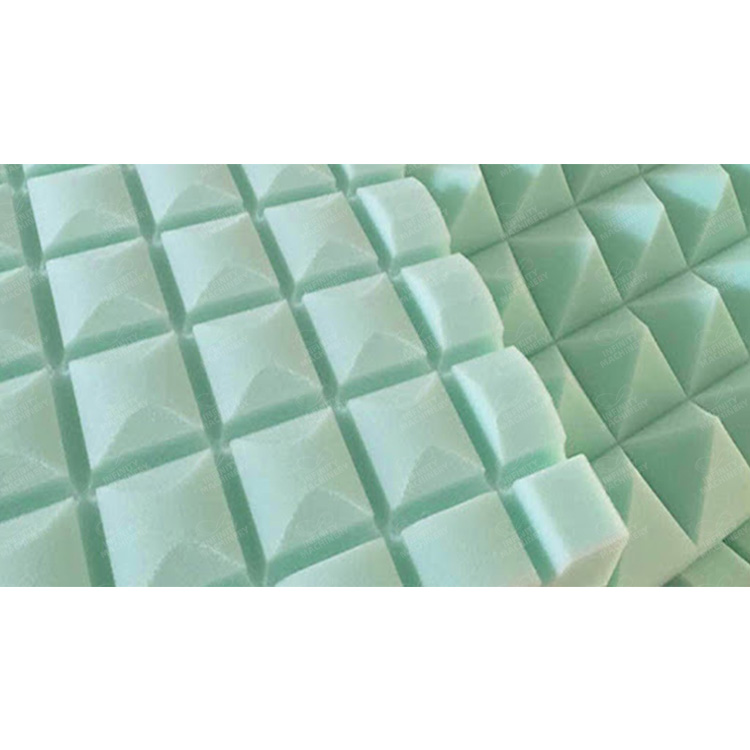
| Specification | IF-CNCH horizontal blade | IF-CNCVH horizontal and vertical blades |
|---|---|---|
| Maximum block (L × W × H) | 2000 × 2000 × 1200 mm | 2200 × 2000 × 1200 mm |
| Listed cutting speed | 5–30 m/min | 0–50 m/min |
| Machine size (L × W × H) | 4500 × 4300 × 2400 mm | 10500 × 4500 × 3250 mm |
Both product sheets list ±0.5 mm processing accuracy. For a sample trial, put a tolerance on the tight inside radius, narrow slot or long curve that controls assembly. Agree on the foam grade, measurement points and recovery time. Use the full loading-to-unloading time to estimate parts per shift.
Deduct the top and bottom trim first. Between adjacent sheets, allow for the loss measured on your own line. Count only the gaps between sheets. The trim allowance covers the two outside faces.
Worked example. A 1200 mm block with 20 mm trimmed from each end of its height leaves 1160 mm. At 30 mm per sheet and an assumed loss of 1 mm between sheets, 37 sheets plus 36 gaps use 1146 mm. A 38th sheet will not fit. An order for 80 mattresses with two layers each needs 160 sheets, or at least 5 blocks on this layout.
Replace the example loss with a measured value for the same material, blade and sheet thickness before using the estimate to order stock.
Bring your usual grade, the softest foam you process and the part with the most difficult profile. Label each block with its grade or density and record its condition before the cut. Agree on the measurement method before starting the machine.
| Check | How to sample | What to record |
|---|---|---|
| Sheet thickness | Keep the first, middle and last sheets. After equal recovery time, measure each at the four corners and center. | Target, readings and largest deviation |
| Squareness | Measure both diagonals and the width at three heights on the same sample. | Diagonals, widths and hold-down setting |
| Profile fit | Fit the trial part to a template or mating component. Pay particular attention to seams and inside radii. | Drawing revision, check points and a photo of the accepted part |
| Usable output | Time a complete run from loading through changeovers and unloading. Count accepted parts separately. | Elapsed time, total parts, accepted parts and rework causes |
Keep the signed drawing, measurements and accepted sample together. If you change the foam formulation or move to the other end of the thickness range, repeat the same checks.
Draw the route a sheet will take. Mark doors, columns, incoming blocks and the next production station. The IF-FYP10 has a 10.5 m table, but the machine itself measures 11.5 × 11 m. Add the sheet trolley, operator position, service access and aisles before approving the layout.
Compare two quotes on accepted sheets per shift. Include labor, electricity, blades and sharpening consumables over the same shift. In an example using your own currency, a cost of 960 for 320 accepted sheets is 3.00 per sheet. A cost of 840 for 240 accepted sheets is 3.50 per sheet.
Ask both suppliers to itemize table or rail configuration, supplied blades, spares, freight, installation, commissioning and training. Agree on the acceptance test and list any future rail extension or take-off equipment separately.
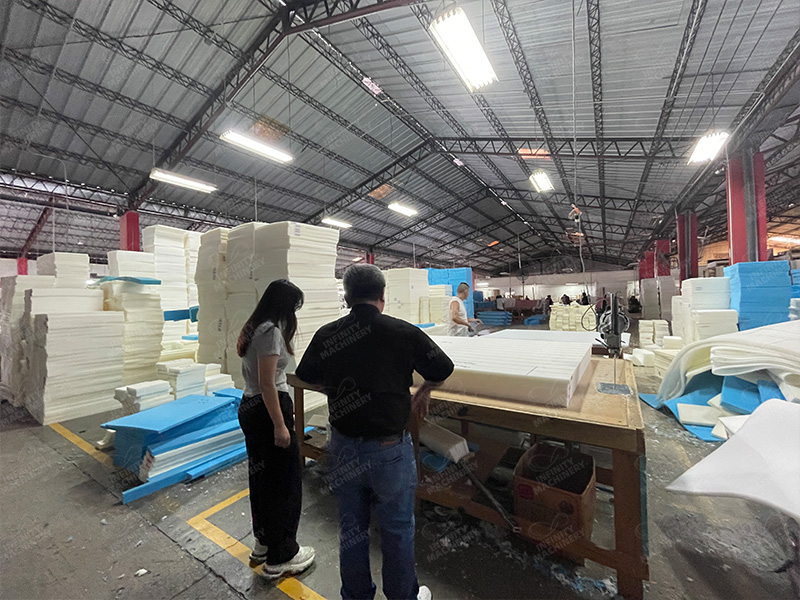
During a three-day visit to a mattress producer in El Salvador, Infinity engineers surveyed the available space, existing machinery and material flow. The team used those observations to discuss a layout for the foaming and cutting stages.
For a retrofit, mark where blocks arrive, which side will receive stacks of cut sheets and which aisles must stay open for existing equipment. With those points on one drawing, the supplier can check a straight rail run or a carousel footprint against the space you actually use.
Choose the region where the cutter will run, then find your country. Each entry pairs local trade figures with the paperwork to discuss with your importer or plant engineer. The example above each table shows how a foam processor in that region uses or supplies cut foam.
2024 trade, in US dollars. Machinery imports cover other rubber- or plastics-working machinery (HS 847780). Mattress exports cover cellular rubber or plastic mattresses (HS 940421). Neither series measures cutter sales. Values are rounded to millions (m) or thousands (k). Machinery data · Mattress data
Canadian converter Domfoam uses CNC equipment for cut-to-size shapes. For shaped cores, send the tightest inside radius with the drawing. For flat comfort layers, specify the thickness tolerance after the foam has recovered. Domfoam · cut-to-size foam
| Country | Machinery imports | Mattress exports | What to check before ordering |
|---|---|---|---|
| United States | $754.2m | $116.7m | Machine guarding and electrical approval. OSHA requires guarding at the point of operation and around hazardous moving parts. Confirm the applicable electrical approval route with the plant. Where NRTL certification is required, ask for the certification mark and its scope for the quoted electrical equipment. OSHA · guarding · OSHA · electrical approval |
| Canada | $121.7m | $17.9m | Electrical approval by province. Identify the installation province. In Ontario, ask for a recognized certification mark or an accepted field-evaluation label for the equipment. A panel-only label covers the panel; agree who will arrange any evaluation of the assembled cutter. Ontario ESA · approval marks |
| Mexico | $353.5m | $128.7m | Workplace machinery safety. NOM-004-STPS-1999 requires the employer to assess machinery risks and establish a safety program. Request a guard layout and operating and maintenance instructions that the plant can use for its risk study before commissioning. Mexico · NOM-004-STPS |
UK converter AJ Foam describes CNC-cut components, channelled profiles and stepped mattress layers. For work like this, a side view of the profile and its mating layer make a more useful trial than a flat sheet alone. AJ Foam · conversion capabilities
| Country | Machinery imports | Mattress exports | What to check before ordering |
|---|---|---|---|
| Germany | $474.6m | $120.7m | CE marking and a signed declaration. For a complete cutter placed on the EU market before 20 January 2027, request CE marking, the manufacturer’s EC Declaration of Conformity under Directive 2006/42/EC and German instructions. From that date Regulation (EU) 2023/1230 generally applies; specify the EU declaration for the applicable route. European Commission · machinery · Germany · Machinery Ordinance |
| United Kingdom | $152.2m | $11.5m | Choose the destination and marking route. For Great Britain, the machinery guidance provides UKCA and recognized CE routes. Ask for the signed declaration matching the route, the machine marking and English instructions. Identify Northern Ireland separately: EU marking rules apply there, with UKNI added where a UK body carries out mandatory third-party assessment. UK · machinery guidance |
Nantong Easysleep in China combines continuous foaming and CNC cutting for mattress, pillow and sofa foam. When cutting follows a foaming line, quote the incoming block size and the number of distinct profiles in a shift. Nantong Easysleep · manufacturing
| Country | Machinery imports | Mattress exports | What to check before ordering |
|---|---|---|---|
| China | $852.5m | $792.6m | Check CCC scope for the supplied items. Have the importer compare the quoted machine and separately supplied electrical products with the current compulsory certification catalogue and notices. For an item in scope, record its catalogue category, exact model and applicable CCC conformity evidence. China · CCC catalogue and notices |
| India | $625.2m | $5.4m | Check current BIS Quality Control Orders. India withdrew the 2024 Machinery and Electrical Equipment Omnibus Technical Regulation. Have the importer check current product-specific orders for the cutter and its supplied electrical items. Request the applicable order, Indian Standard and licence or certificate details for any covered item. MHI · withdrawal notice · India · compulsory BIS certification |
| Japan | $77.5m | $3.2m | Separate electrical marking from machine risk information. Ask the importer to check the electrical items against METI’s designated product categories. Obtain the applicable PSE evidence for covered items. For the cutting station, also request the supplier’s residual-risk information for setup, blade changes and cleaning. Japan · METI electrical safety · MHLW · machinery risk information |
Incal in Chile sells made-to-measure polyurethane foam and specifies when larger orders require joined pieces. For a one-piece mattress core, compare the finished width with the usable block width after trimming. Incal · made-to-measure foam
| Country | Machinery imports | Mattress exports | What to check before ordering |
|---|---|---|---|
| Brazil | $161.7m | $4.7m | NR-12 machine safety. Ask how the quoted configuration meets NR-12. Request the Portuguese operating manual, safety-circuit information, guard layout and emergency-stop test procedure so the plant can check the installed machine. Treat these as deliverables on the purchase order. Brazil · NR-12 |
| Chile | $21.0m | $189k | SEC certification scope. Chile’s SEC lists electrical products subject to mandatory certification and the test protocol for each. Give the local importer the machine and component model numbers. For an item on the list, ask for the matching protocol and certificate before shipment. Chile · SEC certification · SEC · regulated products |
South African converter Unifoam offers both laminated and CNC-cut mattress cores. For a laminated design, trial-cut two mating layers and check their fit after recovery. Unifoam · CNC mattress cores
| Country | Machinery imports | Mattress exports | What to check before ordering |
|---|---|---|---|
| South Africa | $53.6m | $1.3m | Guarding on band-knife cutters. Section 5 of the Driven Machinery Regulations covers band saws and band knives. For a band-knife cutter, request drawings showing guards on moving parts and the exposed working length at the cut. Agree how the user will inspect the guards at handover. South Africa · Driven Machinery Regulations, §5 |
| Kenya | $14.6m | $17k | Import conformity or approved exemption. Confirm the KEBS inspection route before dispatch. For a consignment under PVoC, arrange the required Certificate of Conformity. Registered manufacturers importing machinery for their own use may apply for an exemption; have the importer obtain written confirmation for the shipment. KEBS · PVoC exemption criteria |
Australian producer Joyce Foam supplies comfort foams for bedding. If a mattress uses several grades, trial the softest and firmest layers at the same finished thickness and compare the readings after recovery. Joyce Foam · bedding grades
| Country | Machinery imports | Mattress exports | What to check before ordering |
|---|---|---|---|
| Australia | $77.7m | $1.8m | Plant safety and electrical scope. Give the Australian importer safe-use information, guard drawings and relevant test results. Confirm the state or territory of installation. Have the supplier check applicable ACMA rules for the electrical or electronic configuration and document any RCM marking obligation. Safe Work Australia · importing plant · ACMA · product rules |
| New Zealand | $9.7m | $252k | Importer duties and electrical declarations. The importer needs information on intended use, testing and conditions for safe operation. Ask which supplied electrical items are declared articles; a declared medium-risk article requires a Supplier Declaration of Conformity. Match any declaration to the item it covers. WorkSafe NZ · supplier duties · WorkSafe NZ · electrical products |
Machine identification. Ask for ECM document 0P241223.GIMWC71 together with its model annex. It records a voluntary technical-documentation assessment. Match the exact quoted model to the annex and request the manufacturer’s signed declaration separately wherever the destination requires one.
Material evidence. KEYS document KEYS24031442001RH-03 of March 15, 2024 covers the tested RoHS sample. If your contract specifies a particular cable, electrical part or material, ask for the accompanying report and the sample’s connection to the supplied part.
For a destination-specific quote, send the country and state or province, model, supply voltage and any factory acceptance requirements. Ask for a list of documents to be delivered, who issues each one and whether any inspection must take place before shipment. Request the document list for my order
Use a horizontal splitter to cut a full block into sheets of equal thickness. A vertical cutter handles squaring and border strips. If your core goes through both operations, specify the dimensions and required output for each.
Its listed width is 2150 mm, so the block is 50 mm too wide. If you plan to trim first, verify that the remaining width covers the finished part. To keep the full width, check the IF-LT2450 and confirm the rail travel.
Send your production formulation, especially a grade that compresses easily or recovers slowly. Include the target sheet thickness, recovery interval and acceptable variation. Ask for the first, middle and last sheets from the trial.
The IF-FYP series carries rectangular blocks and produces individual sheets. For roll stock, specify the web width, thickness, roll length and take-up requirements so the supplier can evaluate peeling and winding equipment.
Send dimensioned top and side views, file format, material and batch size. Trial the tightest inside curve and longest profile, then time a whole part from loading to unloading. Confirm the delivery schedule separately after the configuration, sample approval and shipping arrangements are agreed.
Include clear height, door openings, columns, the delivery route, power connections and the direction of material flow. For a long-track machine, add the straight rail length. For a carousel, show access around the table and the sheet collection point.
Include block length × width × height, foam grade or density, the finished sheet thickness or part drawing, and the accepted pieces you need per shift. For a contour, mark the critical radius and tolerance. For an existing factory, attach a dimensioned layout. If a cut is already causing problems, send a photo and mark the area you want us to check.
Request a machine recommendation