Facebook

How Do You Calculate Mattress Machine ROI? The Per-Unit Cost Formula

A mattress machine is a capital decision, and the ROI is a calculation that any factory can run on its own numbers. This guide builds the per-unit cost formula step by step: the delivered price spread over the service life, the labor and energy per unit, the maintenance and consumables, the payback period and the comparison sheet that puts two machines on the same scale.
Aug 21st,2026 16 Views
MATTRESS MACHINERY SOLUTIONS

How Do You Calculate Mattress Machine ROI? The Per-Unit Cost Formula

A mattress machine is a capital decision, and the ROI is a calculation that any factory can run on its own numbers. This guide builds the per-unit cost formula step by step: the delivered price spread over the service life, the labor and energy per unit, the maintenance and consumables, the payback period and the comparison sheet that puts two machines on the same scale.

PER-UNIT COST FORMULA PAYBACK MATH FULL OWNERSHIP COST MACHINE COMPARISON
12-24
Months Working Payback Target
8
Years Service Life Model
3
Cost Layers per Unit
2
Machines on One Sheet

Executive Commercial Highlight

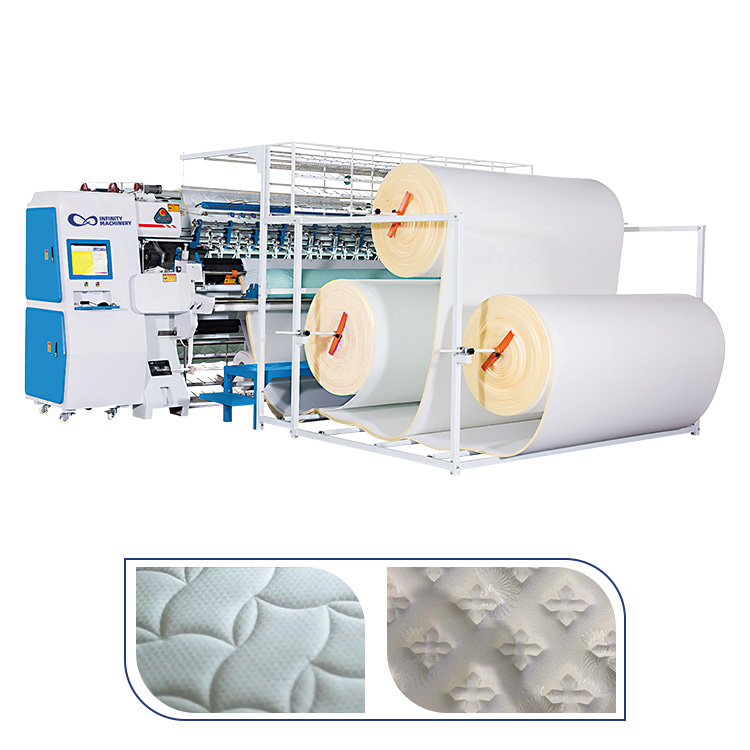
The ROI question is really a cost-per-unit question, because the machine pays back through the units it produces, not through its price tag. The formula is simple: total annual cost divided by annual output gives the cost per unit, and the saving per unit against the old method times the annual volume gives the payback. A double wire pocket spring machine such as the IF-P130-2 replaces manual coiling and assembly labor, a computerized quilting machine such as the IF-Q-1200 replaces the manual pattern work, and a roll packing machine such as the IF-CR8 cuts the packing labor at the end of the line, so the per-unit formula is the common scale that compares them. Pair the ROI sheet with a complete mattress machinery solution and use the mattress production knowledge library to keep the calculation repeatable.

1. Why the ROI Is a Per-Unit Number, Not a Price Tag

The mistake that kills most ROI calculations is comparing the machine price with a vague idea of the saving. The machine does not pay back by existing; it pays back through the units it produces at a lower cost than the method it replaces. Every cost must therefore be expressed in the same unit as the output: cost per mattress, or per coil, or per panel, depending on what the machine produces.

The per-unit number turns a large capital purchase into a number the factory can check every month. When the machine produces the planned volume and the running costs stay inside the budget, the cost per unit comes out as calculated and the payback lands on schedule. When the volume is lower or the running costs higher, the same formula shows the drift early, instead of discovering it years later.

Cost Layer What It Includes How It Is Counted
Capital Delivered price, install, training Spread over the service life in years
Running Labor, energy, consumables Per unit of output at the planned volume
Support Maintenance, spare parts, downtime Annual allowance divided by the output
Total All layers combined Divided by annual output = cost per unit

2. Step 1: Spread the Delivered Price Over the Service Life

The capital layer is the delivered price of the machine, which means the machine price plus shipping, installation, foundation work and operator training. This is the number that appears on the invoice, and it belongs in the ROI as an annual figure, not as a lump sum. The service life is the number of years the machine is expected to run at the planned volume before major rebuilding.

The service life differs by machine type. A pocket spring coiler and a quilting machine are heavy production machines that commonly run for eight to ten years, while a packing machine with more moving parts and film sealing elements may run on a shorter life. Use the manufacturer guidance and the factory maintenance record, and keep the same life for both machines in a comparison so the sheet stays fair.

Machine Delivered Price Service Life Annual Capital Cost
IF-P130-2 pocket coiler 85,000 8 years 10,625
IF-Q-1200 quilting 60,000 8 years 7,500
IF-CR8 roll packing 45,000 6 years 7,500

3. Step 2: Add the Labor, Energy and Consumables per Unit

The running layer is the money the machine consumes for every unit it produces. Labor is the operator time per unit multiplied by the hourly cost; energy is the machine draw multiplied by the operating time and the electricity price; consumables are the thread, film, adhesive and needles that each unit uses. All three are measured per unit so they can be added to the capital share.

The running layer is where the machine earns its payback, because it is the layer that differs most between the old method and the new machine. A manual process carries high labor per unit, and the machine replaces part of that labor with energy and consumables. The saving per unit is the old cost per unit minus the new cost per unit, and that saving multiplied by the annual volume is the annual payback of the machine.

Cost Item Old Method per Unit With Machine per Unit Saving per Unit
Labor 2.50 0.80 1.70
Energy 0.20 0.60 -0.40
Consumables 0.50 0.45 0.05
Total running 3.20 1.85 1.35

4. Step 3: Add the Support Costs That Come After the Purchase

The support layer is the money the machine costs after it is installed: maintenance and spare parts, the downtime it causes, the operator training and the consumables that wear with use. Buyers who skip this layer overstate the ROI, because the maintenance allowance alone typically runs several percent of the machine price per year.

Build the support allowance as an annual figure and divide it by the annual output. A maintenance and spare parts budget of three thousand per year on a machine that produces twenty thousand units adds fifteen cents per unit. The table shows how the allowance grows with the machine value and how it flows into the per-unit total, so the final number is a full ownership cost, not a purchase price.

Support Item Per Year Per 20,000 Units Share of Total
Maintenance and spare parts 2,500 0.13 9%
Planned downtime allowance 1,200 0.06 4%
Operator training per year 500 0.03 2%
Total support layer 4,200 0.21 15%

5. Step 4: Assemble the Sheet and Compute the Payback

The full sheet combines the three layers into one number. The annual total is the capital share plus the running cost at the planned volume plus the support allowance, and the cost per unit is that total divided by the annual output. The payback is then the saving per unit against the old method, multiplied by the annual volume, divided into the delivered price.

The table below shows a worked example for a pocket spring coiler at a twenty thousand unit factory. The annual cost is about thirty-seven thousand, the cost per unit is about one dollar and eighty-five cents, and the saving against the manual method of one dollar and thirty-five cents per unit gives an annual saving of twenty-seven thousand, which pays the eighty-five thousand delivered price back in roughly thirty-one months. Every factory replaces the sample numbers with its own.

Metric Value How It Is Computed
Annual output 20,000 units Planned volume per year
Annual capital cost 10,625 Delivered price / service life
Running cost per unit 1.85 Labor + energy + consumables
Support cost per unit 0.21 Annual support / annual output
Cost per unit total 2.06 Capital share + running + support
Saving per unit 1.35 Old method minus new method
Annual saving 27,000 Saving per unit x annual output
Payback 31 months Delivered price / monthly saving

6. Step 5: Run the Same Sheet on Every Machine You Compare

The comparison only works when every machine is measured with the same inputs. Use the same labor cost, the same energy price, the same service life convention and the same maintenance allowance, and the cost per unit becomes a fair scale. A machine that costs more per unit at your volume is the worse buy even if its price tag is lower, and the reverse is also true.

The practical habit is to keep the ROI sheet as a living document. Update the volume every quarter, the labor cost when wages change and the maintenance allowance from the real record, and the sheet will show when a machine stops paying and when a new one starts to make sense. The same sheet works for a single coiler, a full quilting station or a roll packing upgrade, because the unit is always the output.

Input Why It Must Be the Same What a Change Does
Labor cost per hour Both machines replace the same work Raises or lowers the saving per unit
Energy price Both draw from the same grid Shifts the running cost layer
Service life Fair spread of the capital Changes the annual capital share
Maintenance allowance Full ownership cost Adds or removes cents per unit
Annual volume The payback denominator Shortens or lengthens the payback

7. Featured Infinity Mattress Machinery & Equipment

IF-P130-2 Double Wire Pocket Spring Machine
CORE PRODUCTION

IF-P130-2 Double Wire Pocket Spring Machine

Double wire pocket spring machine that replaces manual coiling and assembly labor, the machine whose ROI case most factories run first.

View Details →
IF-Q-1200 Computerized Chain Stitch Multi-Functional Quilting Machine
COMPUTERIZED QUILTING

IF-Q-1200 Computerized Chain Stitch Multi-Functional Quilting Machine

Computerized quilting machine that replaces the manual pattern work, measured on the same per-unit sheet as every other station.

View Details →
IF-CR8 Automatic Mattress Compression and Roll Packaging Machine
COMPRESSION AND ROLL

IF-CR8 Automatic Mattress Compression and Roll Packaging Machine

Automatic compression and roll packaging machine whose labor saving is the largest line item in the packing station ROI sheet.

View Details →

8. Frequently Asked Questions (FAQ)

Q1: What is the per-unit cost formula for a mattress machine?
Divide the total annual cost of the machine, which is the purchase price spread over its service life plus labor, energy, maintenance and consumables, by the number of units the machine produces in a year. The result is the cost per unit, and the ROI is the saving per unit compared with the previous method, multiplied by the annual volume.
Q2: How do I spread the purchase price over the service life?
Divide the delivered price, including shipping, installation and training, by the expected service life in years. A pocket spring coiler expected to run for eight years carries one eighth of its price per year, and that annual share belongs in the cost sheet alongside the labor and energy.
Q3: Which costs do buyers forget in the ROI math?
The ones paid after the purchase: installation and foundation work, operator training, maintenance and spare parts, consumables and the energy draw of the machine. A calculation that includes only the purchase price overstates the ROI and produces a payback shorter than the real one.
Q4: What payback is considered a good result?
Most mattress factories treat a payback of 12 to 24 months as the working target for a production machine, with the shorter end for high-volume machines and the longer end for equipment that replaces skilled manual labor. The number depends on the factory volume and the labor cost per unit.
Q5: How do I compare two machines with the same price?
Run the per-unit cost model on both with the same labor, energy and maintenance inputs, and compare the cost per unit at the factory volume. The machine with the lower cost per unit is the better purchase even when the prices are identical, because the output and the running costs differ.

WANT A ROI SHEET BUILT ON YOUR NUMBERS?

Send us the machine price, your planned volume, the labor cost and the electricity price, and our team can run the per-unit cost model and the payback for the machine you are considering.

Contact Us

We warmly welcome you to partner with us and build long-term benefits through our future collaborations.
Name *
Email *
Message *
Mobile/ WhatsApp *
Country *
Company Name
Leave a message
Name *
Email *
Message *
Mobile/ WhatsApp *
Country *
Company Name
We use Cookie to improve your online experience. By continuing browsing this website, we assume you agree our use of Cookie.