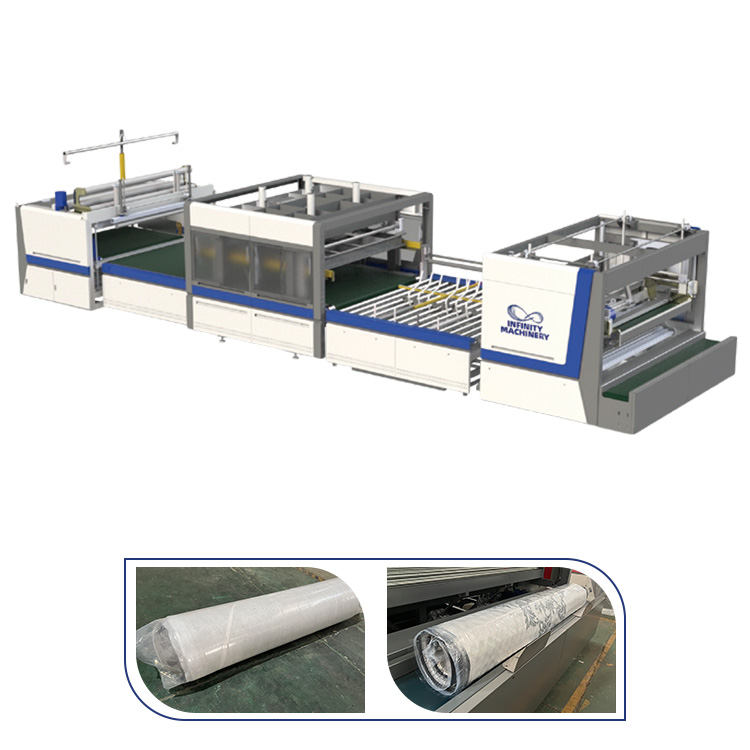
The roll packing machine price is a budget number, but the machine behind it decides the container fill and the freight cost of every export. The IF-CR8 automatic compression and roll packing machine presses and rolls the mattress into the smallest packed volume for maximum container fill, while the IF-CR2 automatic roll packing machine answers the factory that wants the compact roll at a lower price, and the IF-CR5 full automatic rolling machine fits the line that rolls with an adjustable diameter for different mattress sizes. Compare the three against your export volume, add the freight and installation allowance, then ask for a complete mattress machinery solution quote that bundles the packing machine with the rest of the line, and use the mattress production knowledge library to match the machine to your shipping route.
A roll packing machine is priced like a car range, not like a single product: the same machine family covers a wide band depending on the compression power, the roll diameter control and the level of packaging automation. A factory that quotes one flat price is usually quoting one configuration, and the configuration that fits a domestic warehouse is not the one that fits a factory shipping containers overseas.
The buying mistake is to compare list prices across brands without comparing the packed volume they deliver. The useful comparison is the freight cost per mattress, which means the container cost divided by the units a container can carry after packing. That number changes the decision more than the sticker price, because a compression machine costs more up front but fits two to three times more units into the same container.
The first price driver is the compression power, because the press frame, the hydraulic or pneumatic system and the structure all scale with it. A machine that presses the mattress to a fraction of its height needs a stronger frame than a machine that only rolls, and that engineering shows in the price. The packed volume is the number that pays the freight bill, so the compression power must match the container you ship.
The second driver is the roll diameter control. A full automatic machine like the IF-CR5 rolls to an adjustable diameter so the same machine handles different mattress sizes, and the adjustable roll needs a more precise drive and control than a fixed roll. The flexibility matters when your catalog mixes mattress thicknesses, because one adjustable machine replaces several fixed settings on the same line.
The press system is the biggest single factor inside the price. A roll-only machine like the IF-CR2 rolls the mattress into a compact cylinder without heavy compression, which keeps the machine simpler, faster to install and cheaper to run, and it fits the mattress into a smaller volume for transport and storage. That is the machine that answers a factory shipping domestic routes where the volume saving is enough on its own.
A compression and roll machine like the IF-CR8 presses the mattress first and then rolls it, so the price includes the press frame, the hydraulic or pneumatic power and the stronger structure, and it delivers the smallest packed volume that maximizes the container fill. The decision is not which machine is better; it is the freight rate of your export route. When the route charges by volume and the distance is long, the compression premium pays for itself in container savings.
The list price is the headline, and the total cost is the number that decides the budget. The freight and the customs duty add a share that depends on the shipping distance and the machine weight, and the installation, the electrical connection and the commissioning add the labor of getting the machine to run. Together these extras typically land between ten and fifteen percent on top of the machine price.
The recurring cost is the quieter line: film rolls, heating elements, belts and the program control support. A packing machine consumes film with every roll, so the budget should include a stock of film at purchase time, when the supply is arranged with the machine. Training is the last hidden line, because a compression machine that nobody can program is a machine that never pays back.
The price only makes sense against the export volume and the container the factory must fill. A factory that ships a few containers a month does not need the compression press, and the roll packing machine keeps the investment small while still cutting the packed volume. A factory that ships containers every week needs the compression machine, because the extra units per container pay for the price difference within the first two years.
The mattress mix also matters, because the machine must handle the thickest and the softest model in the catalog without crushing the foam. A compression machine needs the right pressure setting for each foam density, so check the mattress range against the machine capability before you commit to a price. The matching table below is the working rule.
The payback calculation compares the machine price with the freight saving and the labor it replaces. When a factory ships uncompressed mattresses, the roll packing machine cuts the volume per mattress, so more units fit into each container and the freight cost per unit drops. The monthly saving is the freight saved on the export volume minus the film, the maintenance and the energy.
The realistic payback window sits between twelve and twenty-four months on a steady export volume and shortens when the route charges by volume and the distance is long. The payback also improves when the machine is part of a complete mattress machinery solution, because the packing machine, the quilting machine and the cutter are sized together and the packed output matches the shipping schedule.
Send us your mattress sizes, the foam densities your line must pack without damage and the containers per month you ship, and our team can size the right roll packing machine and quote the full cost including freight and installation.