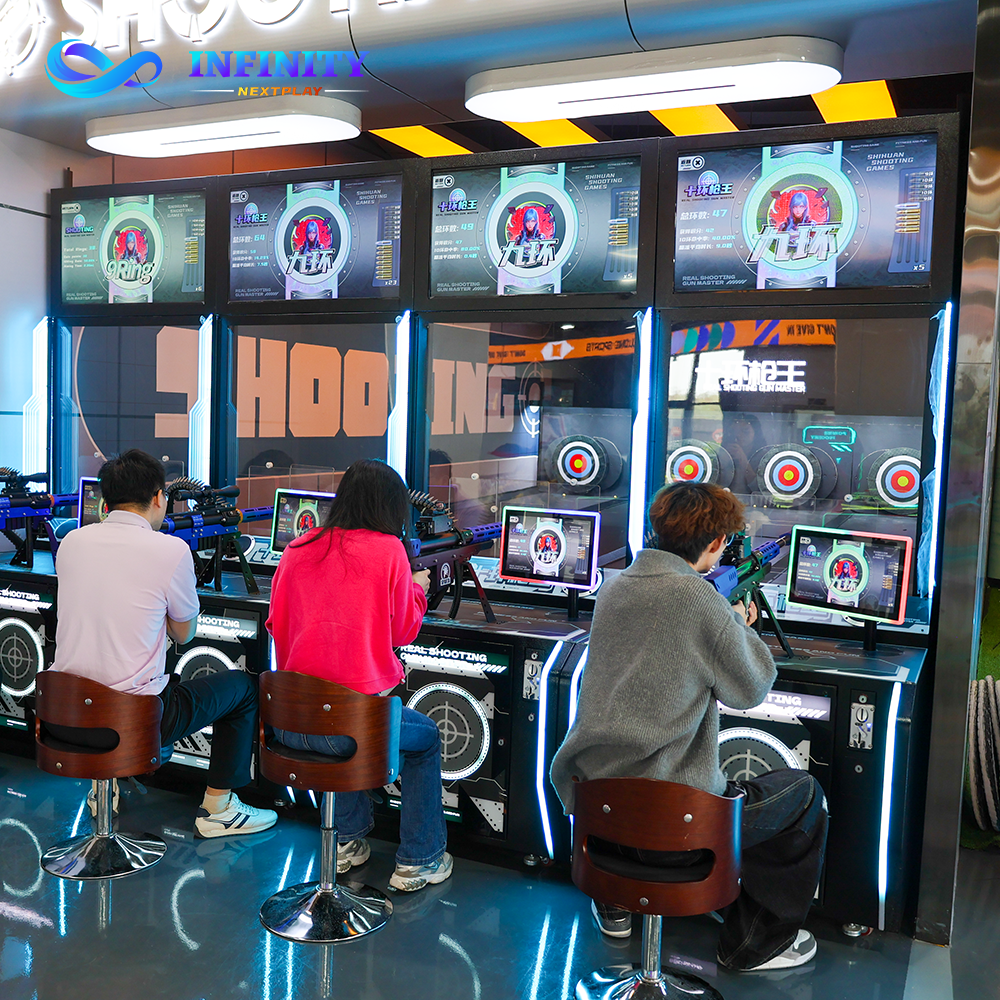
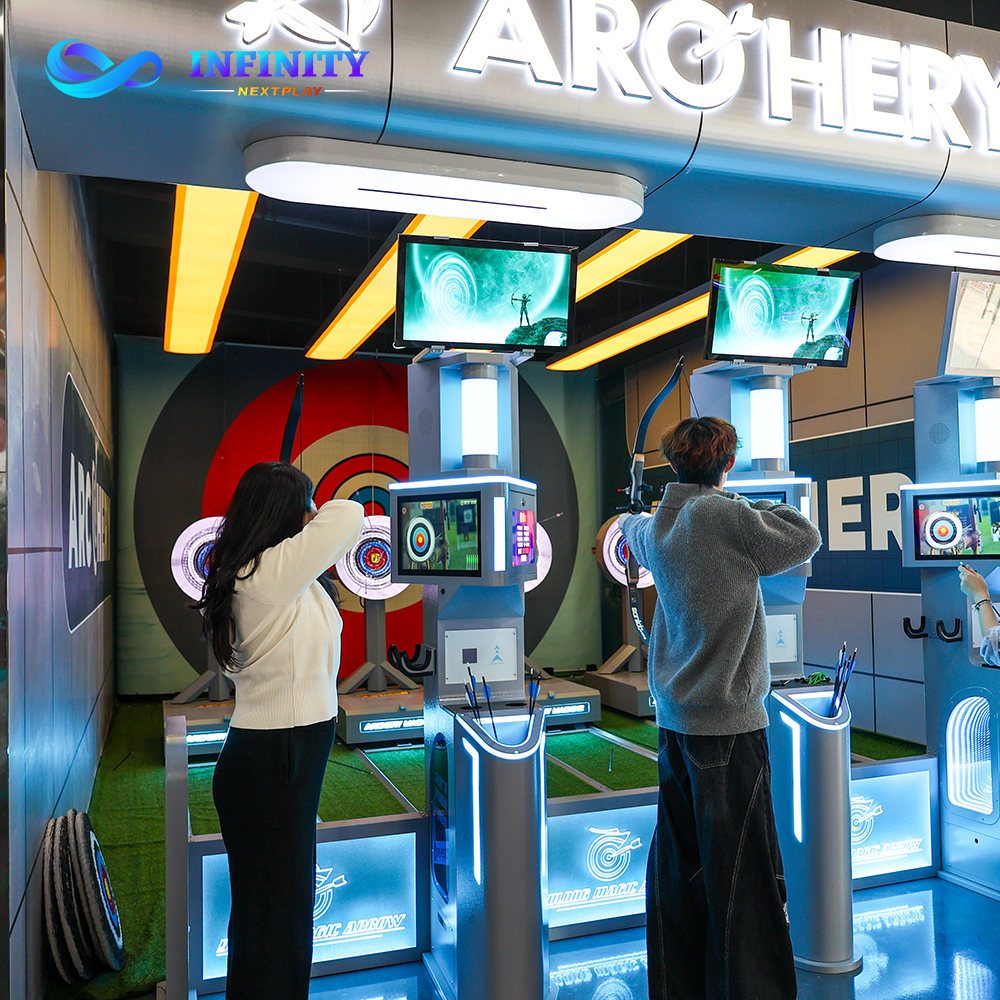
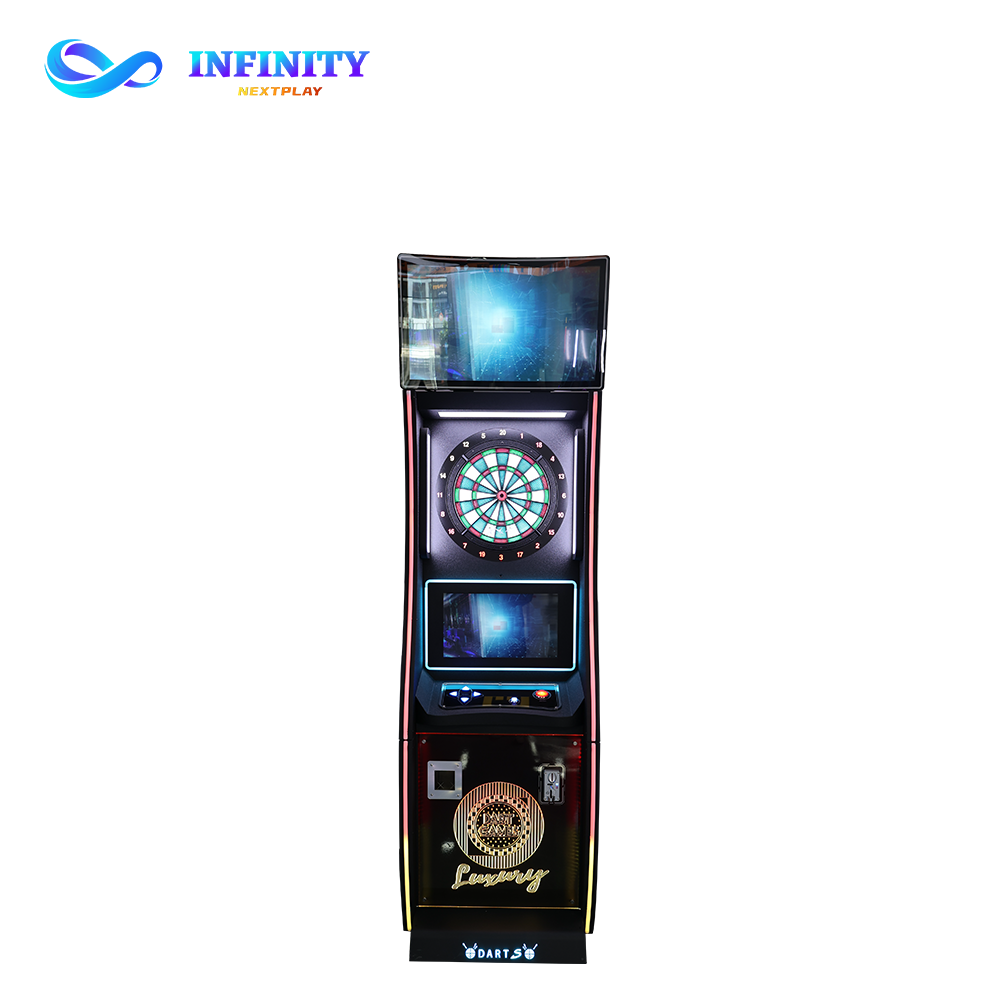
The following equipment units form the primary revenue-generating hardware for the commercial venue described in this guide.
Explore the equipment referenced throughout this guide: Digital Scoring Shooting Simulator for Full Venue Solution - Real-time Leaderboard & Rewards - Ideal for Team Building & Clubs - Q4 Digital Archery Simulator for Full Venue Solution - Adjustable Track Distance & Dual Screen - Ideal for Sports Bars and Clubs - A4 Online Electronic Dart Machine for Full Venue Solution - Global Play & Automatic Scoring - Ideal for Clubs and Competitive Gaming Venues - X7. Each unit is engineered for commercial-grade reliability and backed by full factory support.
The indoor entertainment industry has shifted from passive arcades to active, technology-driven experiences. Digital sportainment combines physical activity with real-time scoring, leaderboards, and immersive environments. This model attracts a broader demographic than traditional arcades because it appeals to competitive adults, families with children, and corporate event planners simultaneously. The key advantage is that sportainment venues generate revenue from multiple streams: pay-per-session fees, food and beverage, corporate bookings, birthday parties, and league competitions. According to industry reports, the global digital sportainment market is projected to grow at 14.2 percent CAGR through 2028, driven by increasing demand for experiential entertainment in urban areas.
Market Growth: 14.2% CAGR through 2028; Revenue Streams: 5+ per venue; Demographic: Ages 6 to adult; Foot Traffic: 200-400 daily visitors in top-performing locations
A digital shooting simulator is the anchor attraction for most sportainment centers. Modern systems use projection-based or screen-based technology with realistic recoil feedback, scoring algorithms, and multiple game modes. The best systems offer both individual practice modes and multiplayer competitive modes, which doubles the revenue per session. A dual-lane shooting setup can accommodate 2-8 players simultaneously depending on the configuration. The initial investment ranges from $12,000 to $28,000 per lane depending on the technology level. Expected payback period is 8-14 months with consistent bookings. Key factors to evaluate include: game library depth, hardware durability for commercial use, ease of maintenance, and software update frequency.
Investment: $12K-$28K per lane; Payback: 8-14 months; Capacity: 2-8 players per session; Session Duration: 10-30 minutes; Revenue per Hour: $80-$200
Digital archery simulators bring a unique competitive element that differentiates your venue from standard arcades. Unlike shooting simulators, archery appeals strongly to the 18-35 female demographic, which is often underserved in entertainment venues. Modern archery systems use foam-tipped arrows shot at electronic targets with real-time scoring display. The sport is easy to learn yet difficult to master, creating high replay value. A single archery lane costs between $8,000 and $18,000 and requires approximately 3 meters of depth and 2 meters of width. The attraction generates consistent revenue from casual walk-in visitors and is particularly popular for corporate team-building events.
Investment: $8K-$18K per lane; Space: 3m depth x 2m width; Demographic: Strong 18-35 female appeal; Corporate Bookings: 30% of revenue; Monthly Revenue: $4K-$8K per lane
Electronic dart machines are the highest-margin attraction in a sportainment center. The hardware cost is relatively low at $3,000 to $8,000 per machine, yet they generate consistent hourly revenue through casual play. Modern dart machines support multiple game modes including cricket, 301, and custom competitive formats. They also support online leagues and tournament brackets, which drives repeat visits. The space requirement is minimal: 2 meters by 2.5 meters per machine. The key revenue multiplier is league programming: weekly dart leagues create a loyal customer base that visits every week, generating predictable recurring revenue.
Investment: $3K-$8K per machine; Space: 2m x 2.5m; League Revenue: 40% of total dart income; Weekly Players: 20-60 per league; Hourly Revenue: $30-$80 per machine
Beyond the three core sportainment attractions, successful venues add supporting elements that increase average spend per visit. These include: mini golf (AR or physical), VR experience pods, LED interactive games, bowling lanes (duckpin or string), and bumper cars. The key principle is attraction clustering: placing complementary attractions near each other encourages customers to try multiple activities during a single visit. Data from existing sportainment centers shows that venues with 4 or more attraction types see 2.8x higher average revenue per customer compared to venues with only 1-2 attraction types.
Optimal Mix: 4-6 attraction types; Revenue Multiplier: 2.8x with 4+ attractions; Cross-sell Rate: 65% of visitors try 2+ activities; Average Spend: $25-$45 per person with multi-attraction
Food and beverage operations typically account for 30-40 percent of total revenue in a well-run sportainment center. The key is designing the F and B concept to complement the entertainment experience rather than compete with it. Quick-service formats work best: food that can be eaten between games without requiring a full sit-down experience. Bar service for adult visitors adds a high-margin revenue stream. The ideal layout places the food and beverage area in a central location that is visible from the main attraction floor, creating impulse purchase opportunities.
F and B Revenue Share: 30-40% of total; Service Format: Quick-service + bar; Average F and B Spend: $12-$20 per person; Profit Margin: 65-75% on beverages; Turnover: 3-4x per evening peak
A modern sportainment center requires a centralized management platform that handles booking, scoring, payment, and analytics. The platform should integrate with all attraction hardware to provide real-time performance data. Key features include: online booking with deposit collection, dynamic pricing for peak and off-peak hours, automated leaderboard management, customer loyalty program integration, and revenue reporting dashboards. The management platform reduces operational overhead by 25-35 percent compared to manual management approaches.
Platform Cost: $200-$500/month; Booking Efficiency: +40% vs manual; Dynamic Pricing Uplift: 15-22% revenue increase; Labor Savings: 25-35% reduction; Data Analytics: Real-time KPI dashboards
The physical layout of a sportainment center directly impacts revenue per square meter. The most profitable layout follows a hub-and-spoke model: the central area contains food and beverage with clear sightlines to surrounding attraction zones. Each attraction zone should have its own waiting area with seating and visibility of the active play area. The entrance sequence should guide visitors past the highest-visual-impact attractions first (typically shooting simulators or VR pods) to create an immediate impression of excitement. Corridor widths should be 2-3 meters to accommodate groups without congestion.
Optimal Size: 400-1000 sqm; Hub Layout: Central F and B with attraction spokes; Corridor Width: 2-3 meters; Revenue per sqm: $45-$80/month; Capacity: 60-150 simultaneous visitors
The most effective marketing channels for sportainment centers are social media (particularly short-form video content), Google Maps optimization, and strategic partnerships with local businesses and schools. Short-form video of people playing shooting games or competing in archery generates organic reach that paid advertising cannot match. Google Maps optimization ensures that your venue appears in local search results for entertainment-related queries. Partnership programs with schools, corporations, and event planners create reliable booking pipelines.
Social Media ROI: 8-12x return on video content; Google Maps: Top 3 local listing drives 70% of walk-ins; Partnership Revenue: 25-35% of bookings; Customer Acquisition Cost: $8-$15 per new visitor
A sportainment center requires fewer staff than traditional entertainment venues because most attractions are self-service with digital scoring. The core team includes: 1 venue manager, 2-3 floor staff per shift, 1 food and beverage attendant, and 1 part-time technician for hardware maintenance. The total labor cost should be kept below 20 percent of revenue for profitability. Self-service booking and payment systems reduce the need for front-desk staff. Automated scoring and game management reduce the need for game attendants.
Core Team: 4-6 staff per shift; Labor Cost Target: Below 20% of revenue; Self-Service Ratio: 80% of transactions; Training Time: 2-3 days per new staff; Technician: 1 part-time per venue
A well-located sportainment center with 500-800 square meters of attraction space can generate $15,000 to $25,000 in monthly revenue within the first 6 months of operation. The revenue breakdown typically follows: 45 percent from attraction sessions, 30 percent from food and beverage, 15 percent from corporate and event bookings, and 10 percent from merchandise and loyalty programs. Break-even is typically achieved within 10-14 months. The key financial metric is revenue per available square meter per hour, which should target $2.50-$4.00 for profitability.
Monthly Revenue: $15K-$25K; Break-even: 10-14 months; Revenue Mix: 45% attractions, 30% F and B, 15% events, 10% other; Revenue per sqm per hour: $2.50-$4.00; Gross Margin: 55-65%
The three most common mistakes are: first, investing too much in a single attraction type instead of diversifying across multiple experiences. A venue with only shooting simulators will attract a narrow demographic and struggle with repeat visits. Second, underestimating the importance of food and beverage design. Operators who treat F and B as an afterthought leave 35-45 percent of potential revenue on the table. Third, poor layout design that creates dead zones or congestion. Every square meter of your venue should either generate revenue or facilitate customer flow. Budget 5-8 percent of annual revenue for content updates, special events, and seasonal promotions.
Mistake 1: Over-investment in single attraction; Mistake 2: F and B as afterthought (lose 35-45% revenue); Mistake 3: Dead zones in layout; Content Budget: 5-8% of annual revenue; Planning Lead Time: 3-6 months before opening
Q: What is the minimum space needed for a sportainment center? A: 300 square meters for a basic 3-attraction setup, 500-800 square meters for a full-service venue with 5+ attractions and F and B. Q: How long does it take to build and open? A: 3-6 months from equipment order to grand opening depending on construction timeline. Q: What is the expected ROI? A: Most venues achieve 3x ROI within 18-24 months with consistent marketing and programming. Q: Do I need technical staff? A: One part-time technician is sufficient for most venues. Modern systems are designed for minimal maintenance.
See FAQ section above for details and answers to common questions.
| Attraction | Investment | Space Required | Revenue/Hour | Payback |
|---|---|---|---|---|
| Digital Shooting Simulator | $12K-$28K/lane | 4m x 3m | $80-$200 | 8-14 months |
| Digital Archery Simulator | $8K-$18K/lane | 3m x 2m | $50-$120 | 10-16 months |
| Electronic Dart Machine | $3K-$8K/machine | 2m x 2.5m | $30-$80 | 6-10 months |
| AR Mini Golf (9 holes) | $25K-$45K | 80-120 sqm | $100-$250 | 12-18 months |
| Free Roam VR Arena | $35K-$65K | 6m x 6m | $150-$350 | 10-15 months |
| LED Interactive Game | $8K-$15K | 3m x 3m | $40-$100 | 8-12 months |
Get a free 3D layout for your space. Our team will design the optimal attraction mix based on your venue size and target audience.