

1. The 90-Day Rule and Structural Recovery
Material CraftsmanshipWhen a mattress is vacuum-sealed and rolled, it undergoes immense physical stress. While modern materials are engineered to withstand this, exceeding the 90-day mark significantly decreases the likelihood of a 100% dimensional recovery. A compromised recovery leads to uneven sleep surfaces and diminished edge support, ultimately affecting the brand's reputation for premium comfort.
Material Craftsmanship
- Sleep Science: Exceeding the optimal compression window prevents structural materials from fully rebounding, which can create micro-depressions that disrupt spinal alignment during sleep.
- Technical Solution: Utilizing advanced Automatic Mattress Packing Machines ensures the compression force is perfectly calibrated to protect the mattress core while achieving tight roll-packing.
2. Polyurethane Foam Cell Integrity
Sleep SciencePremium memory foams and high-density polyurethanes rely on an open-cell structure to provide contouring comfort and breathability. When a mattress is left in a vacuum state for too long, these delicate cell walls can adhere to one another. This permanent crushing effect destroys the foam's ability to circulate air and relieve pressure points effectively.
Sleep Science
- Sleep Science: Open-cell foam requires unhindered air circulation to expand and function properly; prolonged vacuum sealing causes the cells to permanently deform, leading to a firmer, less responsive feel.
- Technical Solution: High-precision foam cutting and quilting machinery creates resilient, uniform foam layers that resist tearing and maintain their structural memory even under intense vacuum pressure.
3. Pocket Spring Tension Dynamics
Spinal ErgonomicsHybrid mattresses combine foam with individually wrapped coils for targeted support. While high-carbon steel is highly resilient, keeping these coils compressed flat for over three months can induce metal fatigue. This loss of tension means the mattress will fail to deliver the necessary push-back required to keep the sleeper's spine in a neutral alignment.
Spinal Ergonomics
- Sleep Science: Prolonged compression forces steel coils to lose a fraction of their kinetic memory, reducing the targeted ergonomic support needed to prevent lower back pain.
- Technical Solution: State-of-art Mattress Spring Manufacturing Machines temper the steel coils to precise specifications, ensuring flawless bounce and structural memory post-unboxing.
4. Edge Support and Seam Durability
Material CraftsmanshipThe perimeter of a compressed mattress bears the brunt of the tension when folded and rolled. If the mattress remains in the box for an extended period, the continuous strain on the edge seams can cause the threads to stretch or weaken. Upon opening, weak seams may burst or warp, completely ruining the aesthetic and functional edge support of the bed.
Material Craftsmanship
- Sleep Science: A sturdy mattress perimeter prevents sleepers from rolling off the bed and provides a stable sitting surface, which is easily compromised if the seams fail during the violent expansion process.
- Technical Solution: Implementing heavy-duty, automated tape edge machinery applies uniform, reinforced stitching that guarantees the mattress border survives the intense stress of folding and rapid expansion.
5. Adhesive Curing and Off-Gassing
Material SafetyThe manufacturing process often involves bonding various foam and spring layers together. If a mattress is immediately vacuum-sealed and left in a box for months, residual volatile organic compounds (VOCs) from the adhesives have nowhere to escape. This concentrates the odors, leading to a highly unpleasant off-gassing experience for the consumer when they finally open the box.
Material Safety
- Sleep Science: Trapping freshly applied adhesives in a vacuum seal prevents proper curing and concentrates odors, which can cause respiratory irritation and disrupt the consumer's first night of sleep.
- Technical Solution: Utilizing eco-friendly hot-melt adhesive spray systems ensures rapid, non-toxic curing with zero chemical off-gassing before the mattress is ever sealed.
6. The Final Expansion Rate Standard
DiagnosticsA true mark of premium mattress craftsmanship is how quickly and uniformly it recovers its shape. A high-quality bed-in-a-box should regain 90% of its volume within 4 hours of unboxing. Sluggish, uneven recovery is a direct diagnostic indicator of material fatigue caused by over-compression or substandard manufacturing tolerances.
Diagnostics
- Sleep Science: Rapid and uniform expansion signifies that the internal materials have retained their integrity, ensuring the mattress will perform exactly as designed for thermal regulation and comfort.
- Technical Solution: Automated production lines ensure every layer is perfectly aligned and flawlessly stitched, allowing the mattress to breathe and expand uniformly the exact moment the vacuum seal is broken.
Essential Machinery for Scaling Luxury Production
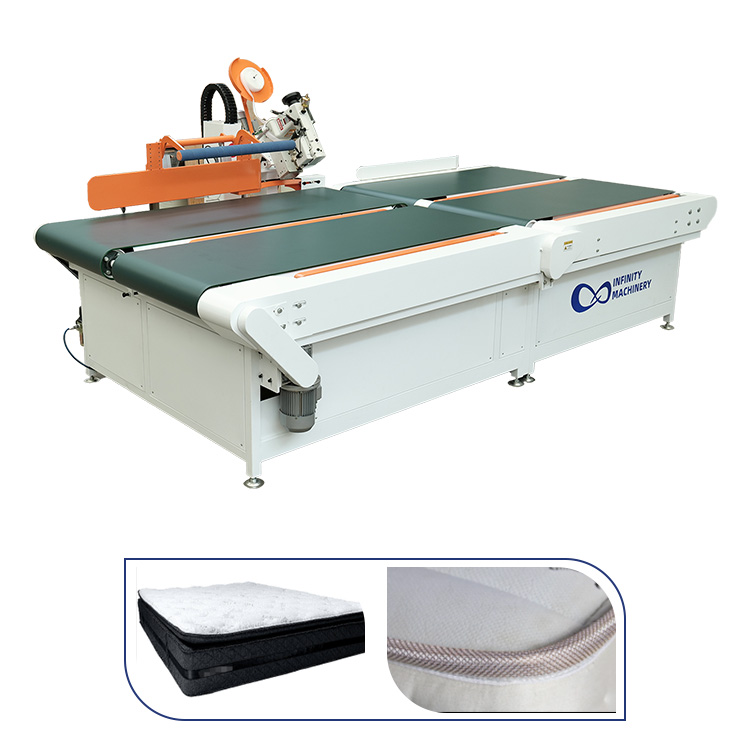
Totally automatic high-speed tape edge machine featuring a robotic arm and PLC control, ensuring reinforced, premium seams that easily withstand the intense stress of vacuum compression and rapid expansion.

Advanced multi-needle quilting machine with full servo control, delivering precise, durable stitch patterns that maintain fabric integrity and structural memory during long-term roll-packing.
The Craftsmanship Standard for Bed-in-a-Box Success
The true secret to delivering premium hotel-grade comfort right out of a shipping carton is consistent, high-precision manufacturing craftsmanship. While consumers focus on the magic of the unboxing experience and the resulting sleep quality, brand owners build lasting success by choosing reliable equipment partners like Infinity Mattress Machinery to maintain uncompromised structural standards from the factory floor to the bedroom.
Elevate Your Mattress Manufacturing Standards
Discover how our advanced automation solutions can ensure your products maintain flawless integrity, no matter how long they stay in the box.


