

1. Root Cause Analysis of Tape Edge Mechanical Wear
Mechanical CalibrationUnplanned machine stoppages during final assembly often stem from unaddressed mechanical friction and misalignment along the sewing carriage guide rails. Operating heavy-duty sewing equipment without proper clearance checks accelerates component degradation, resulting in skipped stitches, frayed binding tape, and extended shift downtime.
Engineering Analysis: Wear Progression
- Friction Factor: High-speed carriage movement generates localized thermal expansion, causing tight tolerances to bind if lubrication intervals are missed.
- Technical Solution: Implementing automated lubrication systems and digital sensor feedback maintains optimal carriage alignment and eliminates manual greasing omissions.
2. Optimizing Thread Tension and Stitch Integrity
Tension ControlInconsistent thread tension creates severe bottlenecks by inducing frequent thread snaps and puckered seams on high-profile mattress borders. Plant supervisors must balance needle and bobbin tension dynamically to accommodate varying quilt thicknesses without stalling production output.
Operational Parameter: Tension Stability
- Material Insight: Heavy multi-layer ticking requires adaptive tension regulation to prevent snapping during rapid corner deceleration phases.
- Technical Solution: Modern servo-driven tape edge machines utilize programmable tension controllers that adjust dynamically based on mattress loft and sewing speed.
3. Routine Lubrication and Component Health Schedules
Maintenance ProtocolNeglecting scheduled oiling of sewing hooks and shuttle assemblies invites catastrophic seizing at peak operating speeds. Establishing a strict, shift-based preventive maintenance checklist ensures that high-wear assemblies remain adequately lubricated and thermally stable.
Diagnostic Step: Lubrication Flow
- Component Check: Inspecting oil reservoirs and wick feeds prevents dry-fire friction on rotary hooks operating above 2,500 RPM.
- Technical Solution: Upgrading to automated oil-supply sewing heads ensures continuous, metered lubrication directly to critical friction points without operator intervention.
4. Upgrading Legacy Equipment vs. Maintaining Worn Components
Equipment EvaluationFactory owners frequently bleed capital into repairing obsolete, mechanically-linked tape edge machines that suffer from chronic calibration drift. Evaluating the true cost of frequent electrical failures versus investing in modern PLC-controlled automation is essential for long-term plant profitability.
Financial Analysis: Total Cost of Ownership
- Downtime Cost: Older machines demand veteran mechanics for tedious manual adjustments, driving up hourly maintenance overhead and lost output.
- Technical Solution: Replacing legacy units with modern automated lines dramatically reduces maintenance frequency while guaranteeing consistent edge squareness and zero-defect output.
Essential Machinery for Scaling Production
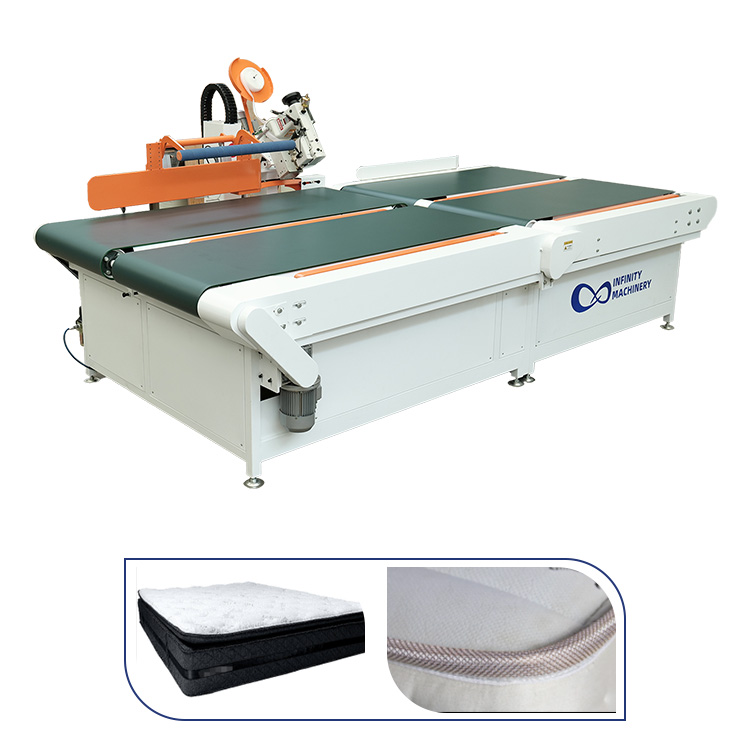
Fully automatic high-speed tape edge machine featuring a robotic arm, automatic 90-degree turning, and PLC control to eliminate manual handling bottlenecks.

Equipped with a moving high-speed sewing head and automatic lifting table, offering stable operation and low noise for premium bedding plants.
5. Pneumatic System and Air Pressure Management
Pneumatic CalibrationPneumatic clamping, lifting tables, and corner-turning mechanisms rely on consistent compressed air delivery to execute rapid, synchronized cycles. Pressure drops or moisture contamination in air lines lead to sluggish actuator response times and jammed mattress feeds.
System Audit: Air Quality & Pressure
- Moisture Risk: Unfiltered condensation in pneumatic valves causes internal corrosion and erratic solenoid actuation during high-speed runs.
- Technical Solution: Installing dedicated air dryers, regulators, and particulate filters ensures clean, stable pressure across all automated pneumatic clamps.
6. Operator Training and Error Prevention Workflows
Operational SafetyEven the most advanced machinery suffers premature wear when operated outside recommended parameters or loaded incorrectly by untrained personnel. Standardizing operator onboarding and establishing clear daily startup checklists drastically cuts down on user-induced mechanical failures.
Process Control: Standard Work
- Human Error: Improper material alignment or incorrect bobbin insertion frequently triggers needle strikes and hook damage.
- Technical Solution: Utilizing intuitive touchscreen interfaces with graphical error diagnostics empowers operators to resolve minor faults before they escalate into major overhauls.
7. Spare Parts Management and Quick-Swap Strategies
Inventory ManagementProlonged downtime often stems not from the complexity of a breakdown, but from waiting days for replacement components to ship. Maintaining an organized inventory of high-turnover spare parts—such as loopers, needles, feed dogs, and drive belts—is vital for plant resilience.
Inventory Parameter: Critical Spares
- Stockout Risk: Relying on just-in-time ordering for specialized sewing heads or electronic sensors risks multi-day production halts.
- Technical Solution: Establishing a critical spares locker with pre-configured modular assemblies allows maintenance crews to execute rapid sub-assembly swaps in minutes.
Strategic Plant Investment Takeaway
Eliminating operational downtime on your tape edge line is not merely a maintenance challenge—it is a core driver of factory profitability. By integrating precision-engineered machinery from Infinity Mattress Machinery, facilities can drastically lower their cost-per-bed, maximize output per shift, and secure a lasting competitive edge in the global bedding market.
Ready to Scale Your Mattress Manufacturing Plant?
Contact our engineering experts today for a customized production line layout and competitive machinery quote.


