

1. Pre-Operational Inspection and Diagnostic Checkpoints
Diagnostic ProtocolBefore initiating daily production runs, operators must execute a thorough structural and electrical audit. Identifying minor mechanical discrepancies early prevents catastrophic sewing head failures, uneven corner stitching, and unnecessary fabric waste.
Mechanical Integrity Check
- Inspection Focus: Check for loose fasteners, bracket alignment, and guide rail debris accumulation prior to startup.
- Technical Solution: Utilizing calibrated torque wrenches and daily alignment checklists ensures steady baseline performance across high-speed runs.
Electrical & Pneumatic Validation
- Parameter Check: Verify incoming line voltage, proximity sensor responsiveness, and stable air pressure levels.
- Technical Solution: Integrating automated pressure switches prevents erratic pneumatic clamping during high-speed turnover cycles.
2. Sewing Head Tension Alignment and Thread Path Calibration
Tension ControlNeedle and looper thread tensions govern the structural strength and aesthetic quality of the tape edge seam. Misaligned tension disks or improper thread routing frequently lead to skipped stitches, thread breakage, and unacceptable product scrap rates.
Thread Path Friction Analysis
- Material Insight: Inspect ceramic eyelets, tension spring elasticity, and needle bar height positioning for wear.
- Technical Solution: Calibrating the sewing head to optimal factory specifications eliminates thread fraying during continuous high-speed operation.
Needle-to-Looper Timing
- Mechanical Parameter: Precisely measure hook clearance and needle deflection under heavy-duty multi-layer loads.
- Technical Solution: Advanced synchronization prevents needle strikes, extending consumable lifespans and maintaining seamless production flow.
3. Conveyor Drive and Robotic Arm Synchronization
Motion SynchronizationModern automated systems rely on precise synchronization between the conveyor drive belts and the robotic turnover arms. Timing discrepancies between material feed rates and head movement cause puckered corners and crooked seams.
Servo Motor Feedback Calibration
- Control Parameter: Monitor encoder pulses and axis tracking to ensure exact positioning during multi-stage mattress transfers.
- Technical Solution: Digital closed-loop servo controls instantly correct micro-slippage, guaranteeing straight, repeatable edge sutures across automatic tape edge equipment.
Conveyor Belt Tensioning
- Operational Metric: Evaluate belt tracking, roller alignment, and friction coefficients under heavy mattress loads.
- Technical Solution: Regular tension adjustments prevent material skewing, allowing advanced machinery to operate at peak throughput capacity.
4. Corner Deceleration and Pneumatic Pressure Tuning
Corner DynamicsTransitioning across 90-degree mattress corners requires intelligent deceleration profiles and precise pneumatic clamping pressure. Without proper tuning, the sewing head stretches the binding tape or damages internal foam layers.
Deceleration Ramp Programming
- Parameter Check: Adjust PLC-controlled speed thresholds as the sewing head approaches each corner vertex.
- Technical Solution: Programmed slow-down routines prevent fabric bunching and maintain clean, uniform corner wraps.
Pneumatic Clamp Pressure
- System Metric: Calibrate air regulators to secure thick pillow-top builds without compressing core support layers.
- Technical Solution: Stable pneumatic pressure ensures secure flipping and turning without shifting internal material layers.
Essential High-Precision Tape Edge Equipment
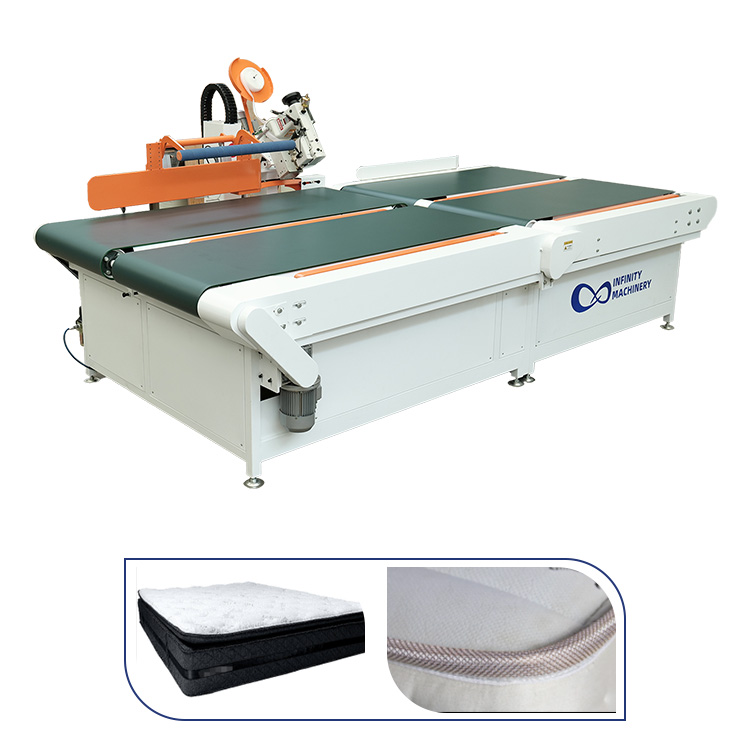
Features automatic rotation, flipping, robotic arm assistance, and PLC control to significantly reduce manual labor intensity and ensure flawless edge finishes.

Ergonomic design with advanced servo system control for precise sewing, automatic mattress positioning, and stable high-speed performance.
5. Lubrication Schedules and Mechanical Wear Monitoring
Preventive MaintenanceHigh-speed mechanical assemblies generate substantial friction, making structured lubrication protocols essential for long-term machine durability. Ignoring lubrication intervals leads to seized bearings, excessive heat generation, and premature gear wear.
Automatic Oiling Systems
- Maintenance Focus: Inspect built-in oil pumps, reservoirs, and delivery lines for uninterrupted lubricant flow to the sewing head.
- Technical Solution: Consistent auto-lubrication reduces thermal degradation and minimizes component friction during extended shifts.
High-Wear Component Audit
- Inspection Protocol: Schedule routine checks of cams, gears, and sliding guide blocks for pitting or dimensional drift.
- Technical Solution: Early identification of worn parts allows scheduled replacements during off-hours, avoiding costly emergency breakdowns.
6. Fabric Feeding Friction and Edge Guide Adjustment
Material HandlingMaintaining consistent edge guidance prevents binding tape drift and ensures uniform margin widths across varying mattress heights. Fabric friction variations require dynamic adjustments to guide plates and presser foot heights.
Presser Foot Clearance
- Mechanical Parameter: Adjust vertical lift ranges to accommodate specialized pillow-tops and high-loft quilted panels.
- Technical Solution: Fine-tuning presser foot pressure prevents fabric dragging while ensuring smooth, multi-layer feeding required for comprehensive mattress manufacturing one-stop solutions.
Edge Guide Alignment
- Adjustment Step: Calibrate guide plates to match specific tape widths and fabric stiffness coefficients.
- Technical Solution: Precise mechanical guidance eliminates skewing, producing perfectly straight and aesthetic seams.
7. Troubleshooting Common Stitch Defects and Root Causes
Fault DiagnosticsWhen stitch irregularities, thread shredding, or puckering occur, operators must follow a structured diagnostic tree to isolate the root cause. Random adjustments without systematic fault isolation often worsen mechanical misalignment.
Skipped Stitch Isolation
- Diagnostic Step: Investigate needle bending, incorrect needle insertion depth, or worn rotary hook timing.
- Technical Solution: Standardized diagnostic workflows quickly pinpoint mechanical wear, restoring pristine stitch formation.
Thread Breakage Analysis
- Root Cause Audit: Check for burrs in the thread path, incorrect tension disk pressure, or abrasive thread stock.
- Technical Solution: Eliminating micro-burrs and optimizing thread paths ensures continuous, high-speed production stability.
Operational Excellence & ROI Through Precision Calibration
Adhering to a rigorous standard operating procedure for industrial mattress tape edge machines directly safeguards factory profitability. By eliminating unexpected downtime, minimizing fabric scrap, and maximizing hourly output per shift, plant owners achieve rapid capital amortization and secure a decisive competitive advantage in high-volume bedding manufacturing.
Ready to Upgrade Your Factory Line?
Contact our engineering specialists today for customized plant design and equipment automation solutions.


