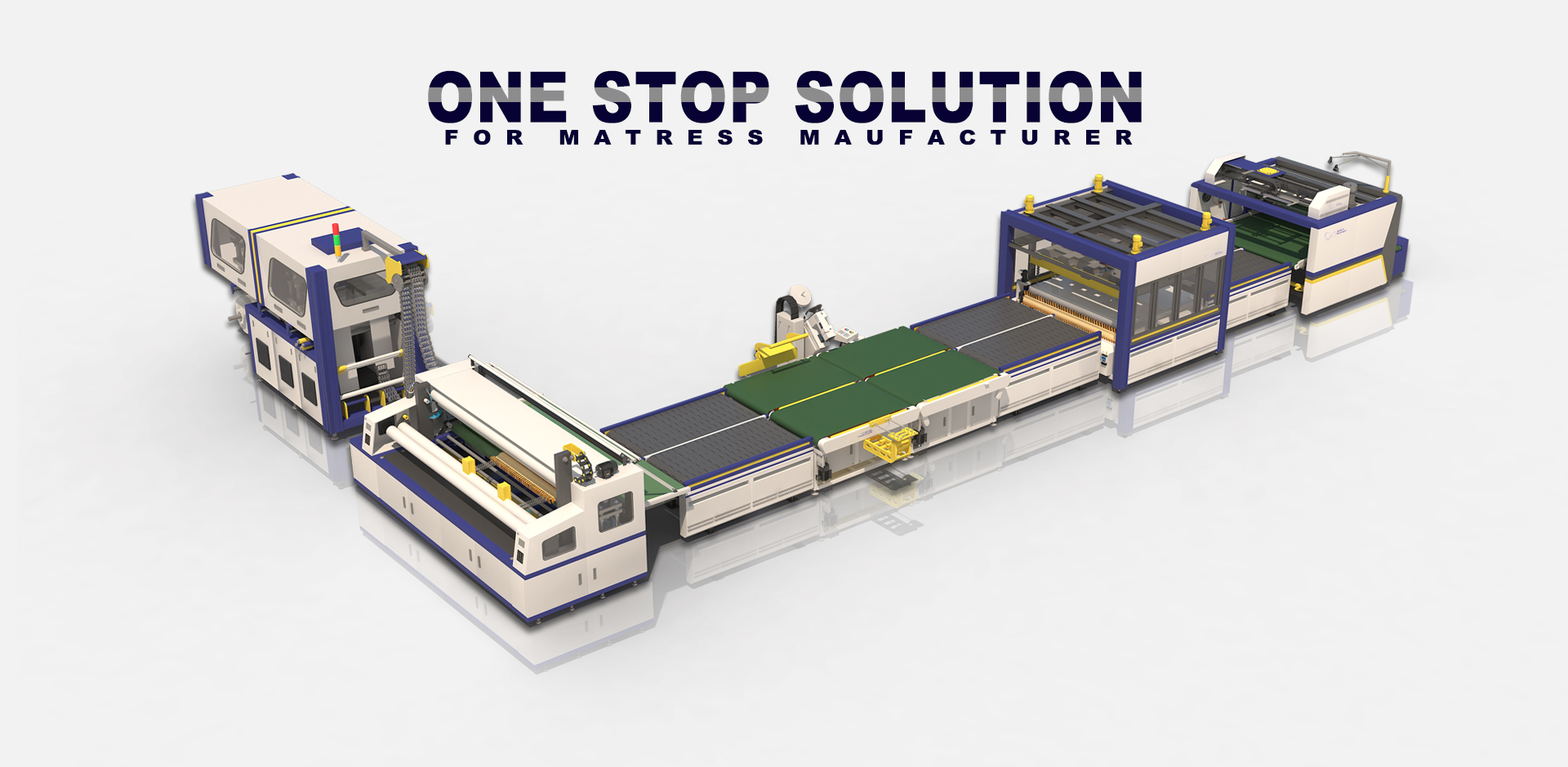
The mattress factory bottleneck is almost never the machine speed; it is the pile of the work in progress that the factory cannot see. The mattress moves from the quilting to the assembly to the tape edge to the packing, and at every handover the factory loses the sight of the unit: the mattress sits in the pile, the operator searches for the missing order, the rework waits for the batch, and the output dies in the queue. The RFID tracking system attaches the tag to every mattress, reads the tag at every station, and shows the position of every unit in the real time, so the pile that grows is seen the hour it grows, the search time disappears and the batch is traced from the first stitch to the packed box. The IF-APL Mattress Automatic Production Line, the IF-PPA Fully Automatic High Speed Pocket Spring Assembly and the IF-BCR8 Full Automatic Compress Fold Roll Packing Line are the machines that the factory ties into the RFID tracking network from the assembly to the packing station.
The mattress factory bottleneck is a visibility problem before it is a capacity problem, and the invisible work in progress is the root of the queue. The handover pile is the first cause: the mattress leaves the quilting station into the staging area, the next station takes the units by the order and the priority, and the pile between the stations grows without the measure, so the factory does not know which station is the constraint until the pile reaches the floor. The search is the second cause: the order is ready at the packing station but the mattress is in the wrong pile, the operator walks the line looking for the unit, and the search time is the pure loss that the factory never records. The order mixing is the third cause: the different models, the different sizes and the different fabrics move through the same line, and without the tracking the factory cannot separate the batch, so the priority order waits behind the bulk order and the delivery date slips. The rework is the fourth cause: the defective unit is pulled from the line, but the repair loop is not tracked, so the reworked mattress re-enters the flow in the random place and blocks the line again. The night shift is the fifth cause: the overnight line runs with the fewer supervisors, the piles grow unseen until the morning, and the morning crew starts the day by sorting the mess instead of producing. The bottleneck rule: the pile, the search, the mixing, the rework and the night shift are all the consequences of the invisible WIP, and the factory that cannot see the flow cannot fix the constraint.
The RFID tracking system gives the mattress factory the real-time map of the work in progress, and the mechanics are simpler than the factory expects. The tag is the first element: the RFID tag is attached to the mattress or the carrier at the first station, the tag carries the unit ID that survives the whole journey, and the tag is cheap enough to be used per unit or reused per carrier. The reader is the second element: the RFID readers are installed at the station entries, the station exits and the handover points, and the reader captures the tag as the mattress passes, without the line-of-sight that the barcode needs and without the operator scan. The database is the third element: every read is written to the tracking database with the station, the timestamp and the unit, so the system builds the movement history of every mattress from the first stitch to the packed box. The dashboard is the fourth element: the factory desk shows the live board with the count at every station, the dwell time per unit and the warning when a unit sits too long, and the board turns the invisible floor into the visible flow. The integration is the fifth element: the tracking connects to the production line control, the automatic stations confirm the completed step and the system holds the unit in the virtual queue until the next station calls it. The tracking rule: the tag travels with the mattress, the reader records every handover, and the database turns the movement into the live map, so the factory knows where every mattress is without walking the floor.
The RFID data turns the bottleneck from the feeling into the proof, and the factory that sees the pile grow in the real time can fix it the same hour. The dwell time is the first metric: the system measures how long every mattress waits at every station, and the station with the rising dwell time is the constraint, so the factory moves the operator or the capacity to the proven bottleneck instead of the guessed one. The WIP count is the second metric: the live board shows the count at each handover point, and the count that climbs through the shift shows the pile before it reaches the floor, so the line is balanced the same day. The throughput trace is the third metric: the system records the completed units per hour per station, and the trace shows the station that caps the line, the gap between the stations and the idle time of the downstream stations that wait for the upstream. The batch tracking is the fourth metric: the system follows the batch through the line, and the factory sees the batch that is stuck, the batch that is split and the batch that will miss the loading date, so the priority is applied where the data points. The decision loop is the fifth metric: the morning meeting reads the previous shift data, the bottleneck is moved, the operator is reassigned or the rework is scheduled, and the change is measured the next day, so the factory stops guessing and starts tuning. The proof rule: the dwell, the WIP count, the throughput trace, the batch tracking and the decision loop turn the bottleneck into the number, and the factory that acts on the number eliminates the queue at its root.
The traceability is the second payoff of the RFID system, and the complete record of every mattress pays in the quality, the compliance and the customer trust. The QC trace is the first payoff: when the defect is found at the packing, the system shows the stations, the operators and the batches that the defective unit passed, and the factory isolates the cause instead of the whole batch, so the recall is the unit and not the container. The customer evidence is the second payoff: the export customer asks for the production record of the order, and the RFID history shows the fabric batch, the assembly date, the QC checks and the packing date per unit, so the factory answers the audit with the printout instead of the guess. The batch compliance is the third payoff: the mattress standards require the material and the process records, and the RFID data files the record per batch automatically, so the compliance paperwork is produced from the database instead of the clipboard. The rework control is the fourth payoff: the defective unit is routed to the repair station with the record, the repair is logged and the unit re-enters the line at the controlled point, so the rework no longer blocks the flow. The brand trust is the fifth payoff: the mattress that carries the complete history is the mattress that the retailer and the end customer trust, and the serialized record is the quiet selling point that the factory holds. The traceability rule: the QC isolation, the customer evidence, the batch compliance, the rework control and the brand trust all come from the same per-unit record, and the factory that tracks every mattress owns the complete story of every product.
The RFID system reaches its full value when it is tied into the production line, and the integration from the assembly to the packing closes the loop. The assembly station is the first node: the pocket spring assembly machine produces the core, the tag is attached at the core entry, and the core is registered in the system before it joins the flow, so the tracking starts at the first production step. The line movement is the second node: the automatic production line moves the mattress through the stations, the readers capture the unit at the quilting, the tape edge and the flanging, and the movement history is written without the operator action. The packing station is the third node: the compress fold roll packing line takes the finished mattress, the system confirms the final read, and the unit is logged as packed and ready, so the packed count in the system matches the count on the floor. The order link is the fourth node: the system links the unit to the order, the model and the destination, so the factory picks the order from the finished record and the loading list is generated from the data. The analytics loop is the fifth node: the production data from the line feeds the daily report, the throughput, the dwell and the rework are reviewed, and the next day plan is set from the measured numbers, so the line improves continuously with the tracking as the backbone. The integration rule: the tag at the assembly, the reads through the line, the confirmation at the packing, the order link and the analytics loop make the RFID system the nervous system of the factory, and the factory that runs the integrated tracking eliminates the bottleneck by seeing it first.
Contact our team for the tracking layout and the IF-APL, IF-PPA and IF-BCR8 line options that integrate with the RFID system for your factory flow.