When we first walked into a mattress finishing room, the bottleneck was obvious.
The quilting line was humming, the spring unit was perfect, but at the very end of the line, operators were physically walking around each mattress — up to a dozen laps per bed — guiding a hand-held tape edge head along the border. Edges came out uneven. Corners puckered. On a bad day, one in ten mattresses went back for rework because the tape seam split or the piping sat crooked. The finishing step, meant to be the moment a mattress looks premium, was quietly costing the plant its margin.
We have since learned that the tape edge is not a minor detail. It is the seam a retailer inspects first, the one a customer runs a hand along in the showroom, and the failure point most likely to trigger a return. Getting it right — consistently, at speed, without an operator circling the bed — is exactly what the IF-T4 Automatic High Speed Mattress Tape Edge Machine was built for.
A mattress is sold three times before it is used. It is sold to the retailer on a spec sheet, sold to the shopper on the showroom floor, and — if it survives shipping — sold again every morning when someone sits on the edge to put on shoes. The tape edge is present at all three moments, and it is fragile. A quilted panel can be flawless, but if the border tape is loose, the whole bed reads as cheap.
The tape edge does three jobs at once: it locks the top panel, the border fabric, and the bottom panel into one clean seam; it holds the piping or welt that gives the mattress its defined shape; and it closes off the edge so filling cannot shift or escape. When that seam is uneven, the mattress looks hand-made in the wrong way. When it is straight, tight, and consistent, the bed looks like it came from a factory that cares — even though, with the right machine, it barely took any human effort at all.
This is why finishing is the wrong place to cut corners. The materials that go into a mattress — the foam, the latex or foam layers, the spring unit — are the majority of the cost. Losing a finished bed to a bad edge seam is the most expensive way to fail, because every input is already inside it. A reliable tape edge machine protects the entire bill of materials in the final thirty seconds of production.
The IF-T4 Automatic High Speed Mattress Tape Edge Machine is a fully automatic edge-taping system built for mattress panels and soft cushions. Its defining trait is simple to say and hard to engineer: the operator does not need to walk around the machine. The mattress sits on a spacious, powered workbench while the high-speed chain-stitch sewing head travels the border on its own. One person loads, watches, and unloads — no laps, no fatigue, no uneven seams from a tired operator on the third shift.
One plant we worked with was running a semi-automatic tape edge machine with two operators. Throughput was capped not by sewing speed but by human walking speed — the operator literally could not keep pace with the rest of the line, so finished quilted panels piled up waiting for edging. After switching the edging cell to the IF-T4, a single operator handled the station, the pile disappeared, and the same line started shipping more beds per day without adding a single quilting head. The machine did not just finish mattresses; it removed the constraint that had been holding the whole factory back.
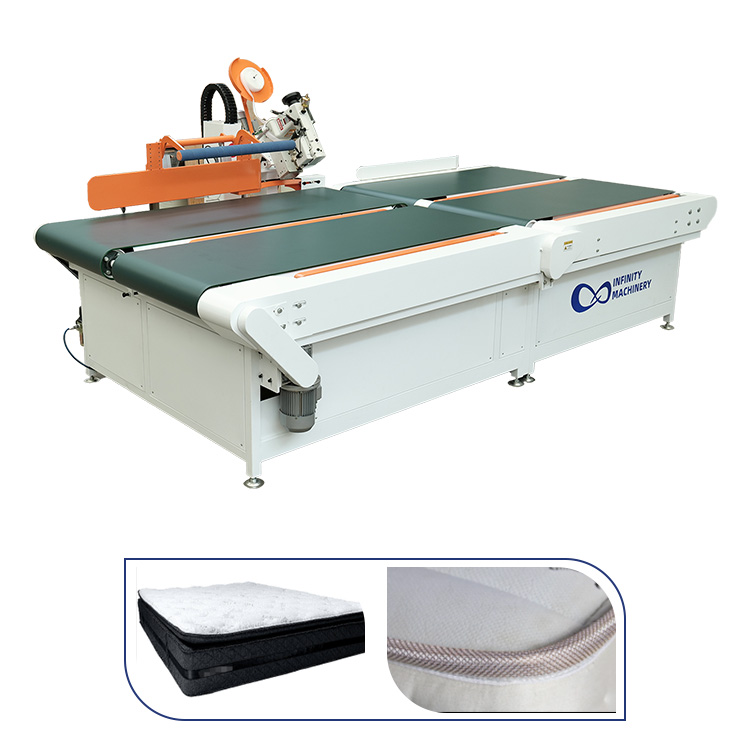
Fully automatic edge taping for mattress panels and soft cushions. One operator, no walking, high-speed chain stitch, built-in thread-break and tailing detection.
Best for: mattress factories that want to remove the finishing bottleneck and consistently hit premium edge quality.
View Product →All three are tape edge machines, but they sit at different points on the automation curve. Picking the right one depends on your volume, your labor cost, and how tightly you need the seam controlled.
| Feature | IF-T4 (Auto) | IF-T3T | IF-T2 (Semi-auto) |
|---|---|---|---|
| Automation | Fully automatic | High-speed chain stitch, electric lift table | Semi-automatic |
| Operator walks around bed | No | Partial | Yes |
| Thread-break detection | Built-in | Depends on head | Manual check |
| Best fit | High-volume, consistent premium finish | Mid-volume, faster than manual | Low volume, tight budget |
| Labor per station | 1 | 1–2 | 2 |
If your finishing cell is the slowest part of the line, the IF-T4 is the upgrade that removes the walking operator entirely. If you are smaller or just starting, the IF-T2 semi-automatic is a sensible entry point, and you can step up to the IF-T4 as volume grows.
A tape edge machine is only as good as the line around it. Here is the finishing flow we recommend, with the IF-T4 sitting right where it removes the most waste.
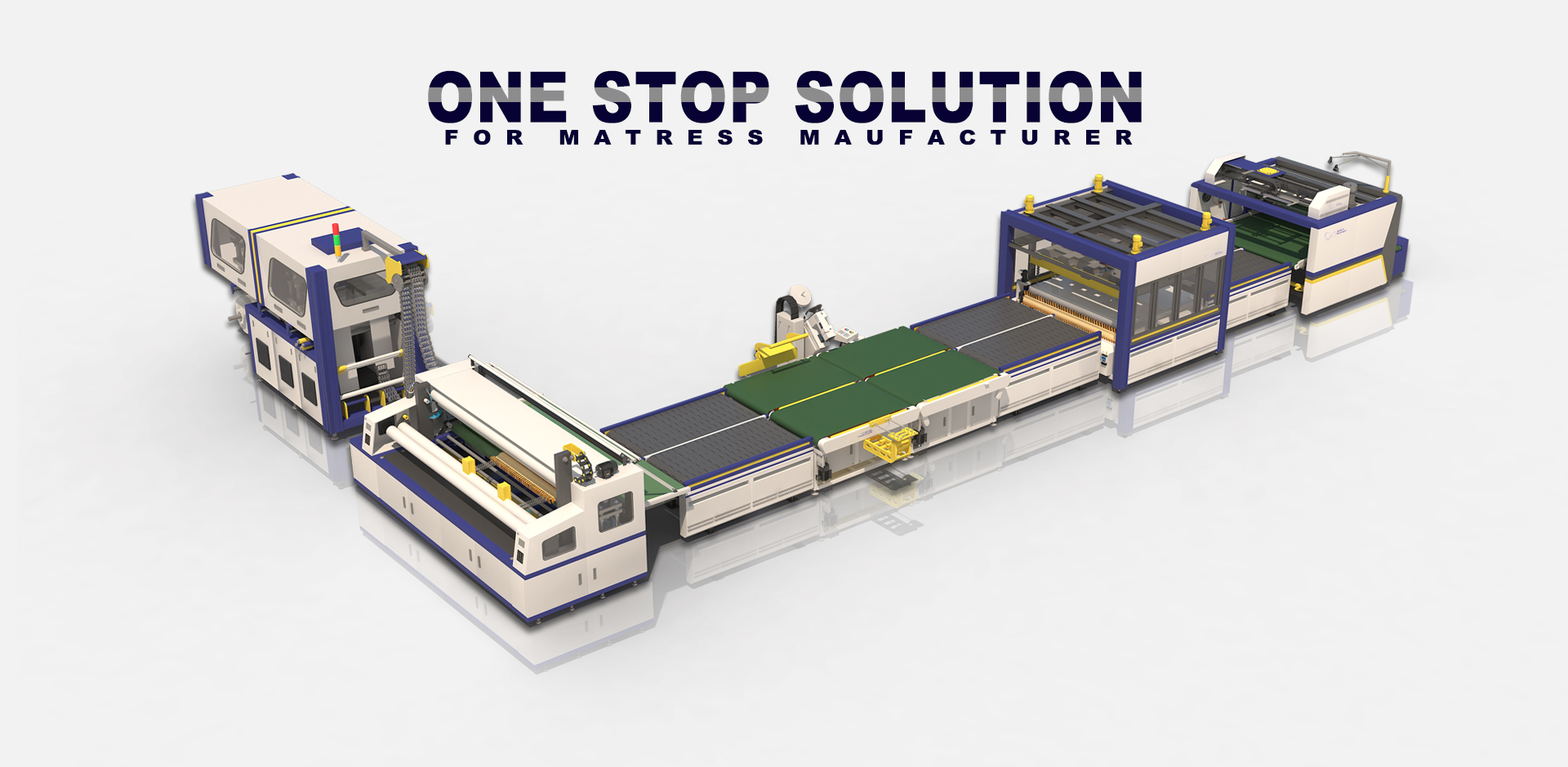
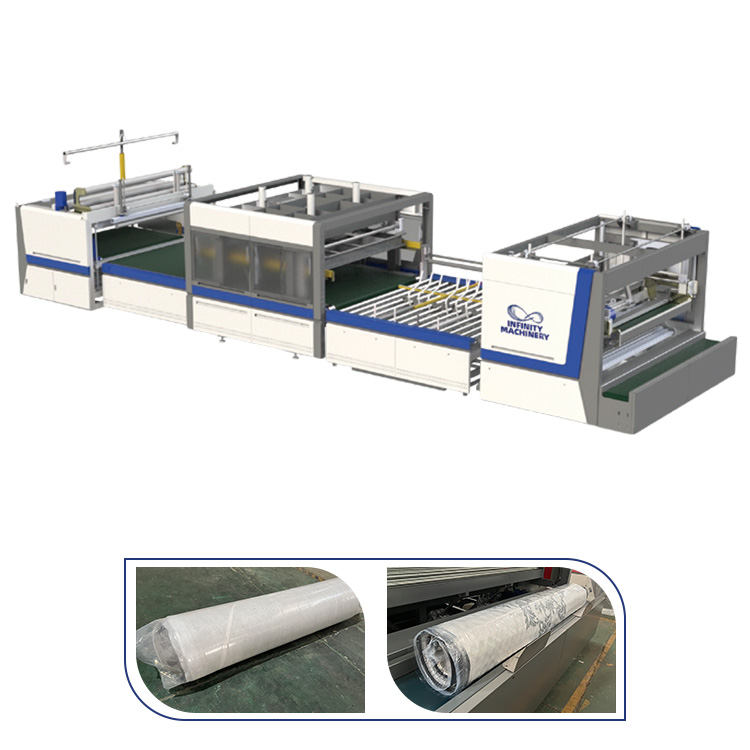
For a plant building from scratch, the full automatic production line bundles quilting, spring, flanging, tape edge, and packing into one coordinated cell — with the IF-T4 as the finishing anchor.
Correct. The mattress rests on the powered workbench while the sewing head travels the border automatically. The operator loads, monitors, and unloads — no laps around the bed, which removes both fatigue and the uneven seams that come with it.
A high-speed chain-stitch sewing head, which is durable, runs fast, and gives the clean, repeatable edge that defines a premium mattress finish.
Two ways. Thread-breaking detection stops the machine before it sews a gapped seam, and the automatic tailing and cut-off give a clean start and end to every seam. Together they eliminate the most common edge defects that send mattresses back for repair.
Yes. The spacious workbench supports full-size and thicker mattresses without sag, keeping the seam square from corner to corner.
It is built for plants that want to remove the finishing bottleneck and hold a consistent premium edge. If you are low-volume or budget-constrained, the semi-automatic IF-T2 is a better entry point, and you can step up later.
Yes. The IF-T4 slots into the finishing stage after flanging and before packing, and it pairs naturally with quilting, spring, and roll-packing machines in the same cell.
Tell us your daily output, mattress sizes, and labor situation — we will recommend the right tape edge machine (IF-T4, IF-T3T, or IF-T2) and show how it fits your line.