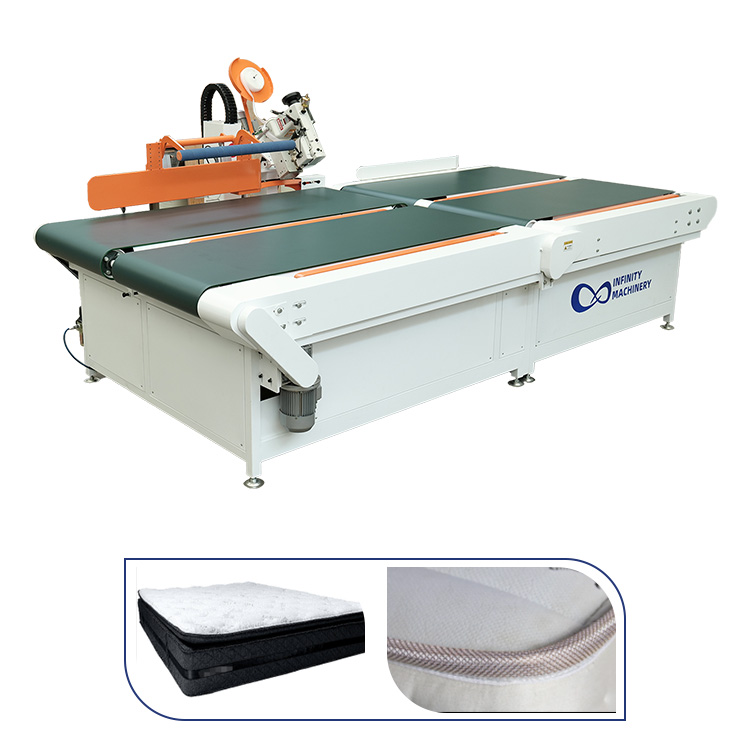
The border line speed is quoted in the meters per minute and the beds per hour, but the number that decides the factory output is the line speed, not the machine speed. The tape edge machine runs the seam at the rated meters per minute, the operator, the handling and the changeovers between the mattresses add the seconds that the rating does not show, and the factory that plans the capacity on the brochure speed overestimates the shift, so the real number is the measured beds per hour of the complete cycle. The high-speed machines close the gap between the rating and the line: the IF-T2 Semi-Auto High Speed Mattress Tape Edge Machine combines the semi-automatic cycle with the high sewing speed, the IF-T4 Automatic High Speed Mattress Tape Edge Machine automates the corners and the guide for the continuous run, and the IF-T5 Automatic High Speed Mattress Tape Edge Machine holds the high speed on the long production runs, so the border line that reaches the 600 beds a shift is the line where the machine speed, the handling rhythm and the changeover time are all aligned.
The hourly speed of the border line is the number of the mattresses that leave the tape edge station finished in the hour, and the number combines the machine, the operator and the workflow. The machine speed is the first layer: the tape edge machine sews the border tape around the mattress at the rated meters per minute, the seam length of the mattress is the perimeter, the queen mattress of about 7 meters of the perimeter takes the minutes of the sewing at the rated speed, and the machine speed sets the theoretical floor of the cycle. The handling time is the second layer: the operator places the mattress on the table, aligns the corner, starts the machine, turns the mattress for the next corner and removes the finished unit, the handling seconds add to the sewing seconds, and the handling time is the difference between the machine rating and the line output. The changeover time is the third layer: the thread change, the needle change, the size change and the material change stop the machine between the runs, the changeovers of the minutes each repeat through the shift, and the changeover time is the silent loss that the hourly plan must include. The staffing is the fourth layer: the border station with the one operator and the one machine runs at the one-man rhythm, the station with the loading helper and the machine runs faster, and the line with the pre-set mattresses feeds the machine without the wait, so the staffing decides how much of the machine speed the line actually uses. The measured speed is the fifth layer: the factory measures the actual beds per hour over the shift, the measurement includes the sewing, the handling and the changeovers, and the measured number is the number that the production plan should use, so the real hourly speed is the measured line speed, not the rated machine speed.
The gap between the machine speed and the line speed is the productivity that the factory loses, and the factory that closes the gap reaches the capacity without the new machine. The machine rating is the first benchmark: the high speed tape edge machine sews the border at the 10 to 14 meters per minute, the queen mattress of the 7-meter perimeter sews in about 35 to 45 seconds of the pure machine time, and the rating suggests the 70 to 90 beds an hour on the sewing alone. The manual handling is the first loss: the operator who loads, aligns, turns and removes the mattress spends the 30 to 60 seconds per unit, the handling doubles the cycle time, and the actual output falls to the 30 to 40 beds an hour, so the handling is the biggest gap between the rating and the line. The automatic cycle is the first fix: the machine with the automatic corner turning and the automatic guide runs the seam with the minimal operator intervention, the operator supervises the cycle instead of steering the mattress, and the cycle time approaches the sewing time, so the automatic machine closes the gap from the operator side. The feeding is the second fix: the pre-positioned mattress queue feeds the machine continuously, the operator removes the finished mattress while the next one is already aligned, and the overlapping work keeps the machine running, so the feeding fix closes the gap from the workflow side. The measured line speed is the second benchmark: the factory that times the complete cycle of the automatic line measures the 50 to 75 beds an hour, the shift of the 8 hours with the breaks and the changeovers reaches the 400 to 600 beds, and the measured range is the honest planning number, so the factory plans on the measured speed and reaches the target instead of the surprise. The gap rule: the machine rating sets the ceiling, the handling sets the loss, and the automatic cycle plus the smooth feeding close the gap, so the line that combines the two reaches the rated output in the measured time.
The high-speed tape edge machines change the border line in the three ways: the speed, the automation and the reliability, and the machine choice matches the production volume. The IF-T2 Semi-Auto High Speed Mattress Tape Edge Machine is the entry of the high-speed range: the semi-automatic cycle keeps the operator in control of the corners while the sewing runs at the high speed, the machine suits the factory that produces the medium volume with the varied sizes, and the semi-auto balance gives the speed without the full automation complexity. The IF-T4 Automatic High Speed Mattress Tape Edge Machine adds the automatic corners: the machine turns the corner and guides the tape by itself, the operator supervises the cycle and the changeovers are shorter, and the automatic corner handling removes the skill and the fatigue from the high-volume run, so the T4 suits the factory that produces the continuous volume with the standard sizes. The IF-T5 Automatic High Speed Mattress Tape Edge Machine is the top of the range: the high speed holds on the long production runs, the heavy-duty construction carries the continuous shifts, and the machine delivers the sustained output for the factory that runs the border line as the dedicated station, so the T5 suits the high-volume line that cannot afford the slowdown. The thread system is the common upgrade: the machines run the thread system that reduces the thread breaks, the fewer breaks mean the fewer stops, and the thread reliability is the hidden speed of the high-speed range, so the factory gains the output from the reliability as much as from the speed. The machine rule: the T2 for the medium volume with the varied sizes, the T4 for the continuous standard volume and the T5 for the dedicated high-volume line, and the factory that matches the machine to the volume runs the border at the speed the volume demands.
The 600-beds-a-shift target is not the machine promise but the line configuration, and the configuration that reaches it combines the machine, the feeding and the changeover management. The machine configuration is the first element: the automatic high-speed machine with the automatic corners runs the seam at the sustained speed, the queen mattress cycles in about a minute with the handling, and the machine alone delivers the 55 to 65 beds an hour, so the machine is the engine of the target. The feeding configuration is the second element: the pre-set mattress queue in front of the machine, the finished mattress removed to the conveyor or the cart, and the operator who never waits for the next unit, so the continuous feeding keeps the machine running at the cycle instead of the idle. The staffing configuration is the third element: the two-person team of the machine operator and the pre-set helper, the helper positions the mattresses and the operator runs the machine, and the two-person rhythm removes the handling from the machine cycle, so the staffing doubles the output of the single-operator station. The changeover configuration is the fourth element: the thread and the needle sets prepared in advance, the size changes scheduled in the batches instead of the random order, and the machine stops only for the planned minutes, so the batch scheduling cuts the changeover loss of the shift. The shift configuration is the fifth element: the 8-hour shift with the two breaks and the setup time leaves about 7 hours of the running time, the 75 beds an hour over the 7 hours of the running time gives the 525 beds, and the 600 beds need the sustained 85 an hour or the overtime window, so the target is honest when the plan counts the running time. The target rule: the automatic machine plus the continuous feeding plus the two-person team plus the batched changeovers is the configuration, and the factory that runs the four reaches the 600 beds in the shift where the single-operator manual station reaches the 200.
The bottleneck audit finds where the border line slows down, and the factory that audits the line sees the seconds that add up to the lost hours. The thread audit is the first check: the thread breaks stop the machine for the rethreading, the poor thread quality and the worn tension disc cause the breaks, and the audit counts the breaks per shift and the minutes per break, so the thread audit finds the reliability loss that the speed rating hides. The needle audit is the second check: the needle wear and the skipped stitches slow the seam quality, the operator slows the machine to compensate, and the audit tracks the needle life and the stitch quality, so the needle audit finds the maintenance loss. The size-change audit is the third check: the change from the twin to the king size stops the machine for the guide and the thread adjustment, the random order multiplies the changes, and the audit counts the changeover minutes per shift, so the size-change audit finds the scheduling loss. The material audit is the fourth check: the border tape that arrives in the tangled rolls, the foam edge that varies in the thickness and the cover that slides on the table all slow the operator, and the audit measures the handling time per material lot, so the material audit finds the supply loss. The operator audit is the fifth check: the fatigue of the long run slows the handling, the trained operator runs the steady rhythm and the new operator runs the slower cycle, and the audit times the operator cycle against the standard, so the operator audit finds the training loss. The audit rule: count the thread breaks, track the needle life, batch the size changes, measure the material handling and time the operator cycle, and the factory that audits the five finds the minutes that the new machine alone would not recover.
Contact our team for the IF-T2, IF-T4 and IF-T5 tape edge machines with the speeds and the automatic cycles that match your shift target.