

1. The Physics of Viscoelastic Foam Fatigue
Sleep ScienceOver time, the cellular structure of viscoelastic memory foam breaks down under consistent body weight. This cellular collapse leads to the dreaded middle sag, compromising ergonomic support. High-end sleep products prevent this by utilizing high-resilience foam layers engineered for long-term structural integrity.
Sleep Science
- Sleep Science: Continuous mechanical stress on low-density foam cells causes them to permanently compress, destroying the mattress's ability to contour and support the spine.
- Technical Solution: Advanced Polyurethane PU Foam Machines ensure perfectly calibrated chemical foaming, creating a uniform, high-density cellular structure that resists fatigue.
2. Substandard Core Density and Base Support
Material CraftsmanshipA mattress is only as strong as its foundation. When the high-density base foam is unevenly cut or structurally weak, the top memory foam layers lack the necessary counter-pressure. This inevitably leads to central sagging and deep body impressions that ruin the sleep experience.
Ergonomic Design
- Ergonomic Design: A perfectly flat and dense base layer is critical for absorbing downward kinetic energy, keeping the sleeper's spine neutrally aligned.
- Technical Solution: Utilizing high-precision CNC Foam Cutting Machines guarantees flawless horizontal and vertical slitting, ensuring the foundational base remains perfectly level for decades.
3. Thermal Trapping and Material Degradation
Material SafetyMemory foam is inherently temperature-sensitive. Excessive body heat trapped within the foam accelerates the degradation of the polyurethane polymers. This thermal breakdown softens the foam prematurely, directly causing the center of the bed to dip and lose its supportive qualities.
Sleep Science
- Sleep Science: Elevated microclimate temperatures weaken the chemical bonds within viscoelastic materials, leading to accelerated material softening and loss of structural integrity.
- Technical Solution: Premium factories integrate advanced cooling gel infusion technologies during the pouring process, maintaining strict temperature controls to preserve the foam's cellular strength.
4. Inadequate Adhesive Application
CraftsmanshipFoam mattresses consist of multiple layers glued together to create a specific comfort profile. If the adhesive is applied unevenly, the layers can shift or separate under the sleeper's weight. This internal delamination creates hollow pockets, manifesting as a visible sag on the surface.
Material Craftsmanship
- Material Craftsmanship: A uniform, eco-friendly adhesive bond prevents internal micro-movements, ensuring the entire mattress block acts as a single, cohesive support system.
- Technical Solution: The implementation of an Automatic Production Line & Glue Spray Line ensures perfectly even hot-melt adhesive distribution, eliminating layer separation and surface dipping.
Essential Machinery for Scaling Luxury Production

High-efficiency computerized panel cutting machine with hidden blade design and conveyor belt, ensuring perfect panel preparation and flawless edge alignment for premium foam beds.
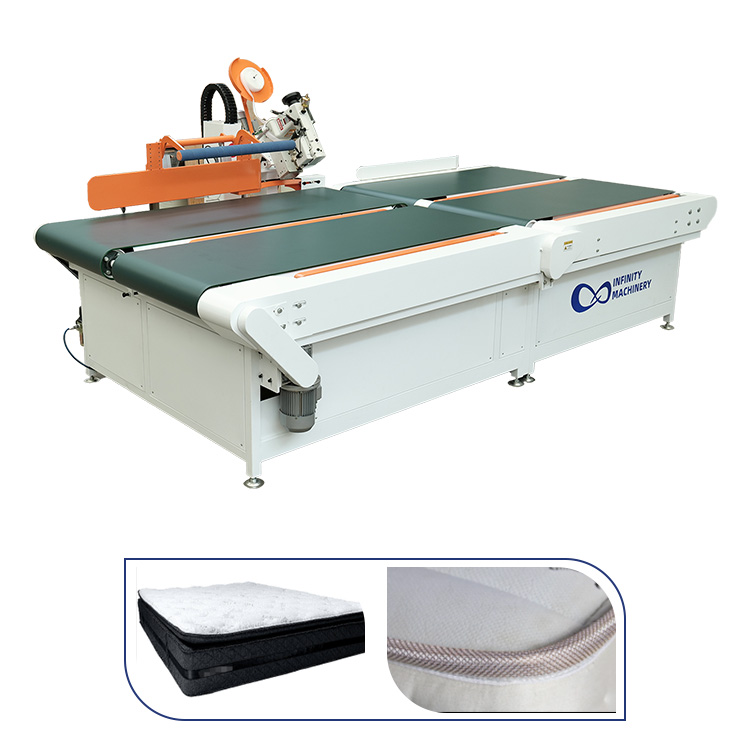
Totally automatic tape edge machine with robotic arm and PLC control, delivering aesthetic, straight sutures and flawless edge support for luxury mattress manufacturing.
5. Improper Edge Support and Border Integrity
Ergonomic DesignWithout robust edge support, the entire foam structure is susceptible to lateral spreading. When the borders bulge outward, the center of the mattress loses its tension and sinks. High-end craftsmanship secures the perimeter to maintain central tension and overall mattress shape.
Ergonomic Design
- Ergonomic Design: Firm mattress borders prevent roll-off and maintain the geometric integrity of the internal foam layers, directly preventing central sagging.
- Technical Solution: Premium brands utilize automated mattress tape edge machines to create a tight, unyielding perimeter suture, locking the foam layers firmly in place.
6. The Role of Precision Roll-Packing in Foam Recovery
Manufacturing StandardBed-in-a-box memory foam mattresses undergo extreme compression for shipping. If the compression process is flawed or held for too long, the foam cells may suffer micro-tears. This hidden damage prevents full recovery, leading to premature sagging once unboxed in the consumer's home.
Material Craftsmanship
- Material Craftsmanship: Controlled, uniform compression protects the viscoelastic cellular structure, ensuring 100% volume recovery and long-term durability.
- Technical Solution: State-of-the-art automatic mattress packing machines apply perfectly calibrated vacuum compression, safeguarding the foam's structural integrity from factory to bedroom.
7. Enhancing Foam Longevity Through Structural Quilting
Sleep ScienceThe top cover plays a crucial role in distributing body weight before it even reaches the foam core. A tightly quilted cover acts as a tension membrane, reducing localized pressure on the center of the bed and significantly mitigating the risk of sagging over time.
Sleep Science
- Sleep Science: Surface tension created by high-quality quilting distributes kinetic energy across a wider surface area, protecting the underlying memory foam from concentrated stress.
- Technical Solution: Industrial computerized multi-needle quilting machines execute flawless, high-density stitching patterns, creating a durable surface barrier that extends the lifespan of the mattress.
The Craftsmanship Advantage in Sleep Science
The true secret to delivering premium hotel-grade comfort and preventing memory foam from sagging is consistent, high-precision manufacturing craftsmanship. While consumers sleep peacefully on superior ergonomic support, brand owners build lasting success by choosing reliable equipment partners like Infinity Mattress Machinery to maintain uncompromised product standards.


