When I shipped my first container of mattresses to Germany, I learned a brutal lesson: the mattress you sell for $120 can cost $90 to ship. Sea freight is charged by volumetric weight, not the actual weight. A queen mattress weighs 25–35 kg but takes up the space of 150 kg of freight. My forwarder billed me for the volume, and my profit margin evaporated on the water.
The fix was not a better freight forwarder. It was a machine. The IF-CR2 Automatic Mattress Roll-Packing Machine compresses, folds, and rolls a finished mattress into a cylinder a fraction of its original size—and it paid for itself in five months. This is the setup I wish someone had handed me on day one.
If you manufacture or export mattresses, you already know the pain. A mattress is mostly air. It is light, bulky, and uncompressible—until it is not. That combination is exactly what ocean freight punishes.
Sea freight is billed on volumetric weight (also called dimensional weight). The carrier takes the package’s dimensions, divides by a divisor (typically 1 CBM = 1,000 kg for sea freight), and charges whichever is higher: the real weight or the volumetric weight. A queen mattress measuring 200 × 150 × 25 cm occupies 0.75 CBM. At the 1,000 kg/CBM rule, that is 750 kg of billable weight for a product that physically weighs 30 kg. You pay for 25× more “weight” than you actually ship.
Now do the container math. A 40-foot high cube (40HQ) holds about 68 CBM. If you load flat, uncompressed queen mattresses at 0.75 CBM each, you fit roughly 90–95 mattresses before the container is physically full—and you hit the volume ceiling long before you hit the 26-ton weight limit. Ninety mattresses per container. That is the ceiling most exporters live under.
At $1,800–$2,800 per 40HQ on a typical Asia–Europe lane (more during peak season), your freight per mattress is $20–$31. Add carton and pallet weight, and a $120 mattress lands at a delivered cost where your margin is gone. Scale that across a 20-foot container monthly and you are handing the shipping line money you should be keeping.
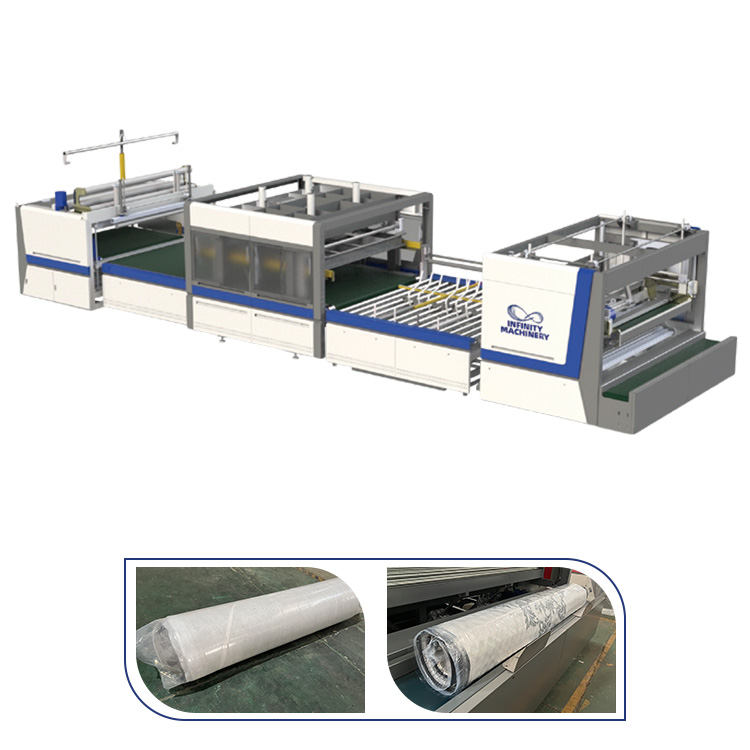
The IF-CR2 Automatic Mattress Roll-Packing Machine is built for exactly this problem. It takes a finished mattress—foam, latex, or pocket-spring (no border)—and runs it through a fully automatic cycle: compression, folding, and roll packing, all controlled by a Siemens PLC. One operator, one machine, one rolled mattress every 30 seconds.
The rolled mattress comes off the machine as a cylinder roughly 30–40 cm in diameter and 100–200 cm long, depending on the model. Wrapped in PE film and optionally a carton, it is now a dense, stackable unit. That single change is what turns 90 mattresses per container into 350–400.
The key point: the container freight cost stays roughly the same, but you ship 4× the product. Your per-unit landing cost collapses. For an exporter, that is the difference between winning a tender and losing it to a competitor who rolls their mattresses.
You do not need a new factory to start roll packing. Here is the retrofit path most of our export customers follow:
Step 1 — Measure your current mattress dimensions. Record length, width, and thickness for each SKU. The IF-CR2 auto-adjusts, but knowing your range helps size the line and choose the right film and carton.
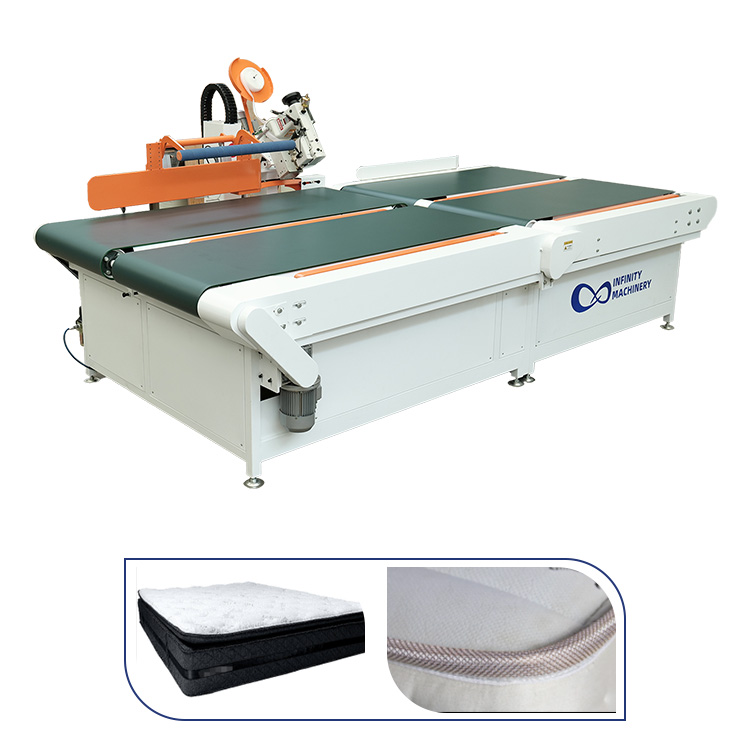
Step 2 — Place the IF-CR2 at the end of production. Most customers site it right after the IF-T4 tape-edge machine, so finished mattresses flow straight into roll packing without manual carrying.
Step 3 — Set the Siemens PLC recipe. Save a compression profile per mattress type (foam, latex, spring). Switching a production run is a few taps on the multilingual panel—no tools, no recalibration.
Step 4 — Add film and carton sealing. The IF-CR2 outputs a rolled, film-wrapped unit. Add a simple carton or PE bag station downstream to protect it in transit and print your label.
Step 5 — Re-run your container calculation. Count how many rolled units fit per 40HQ. Most customers see 350–400 queens where they used to fit 90. That number is your new freight advantage.
A customer in Southeast Asia was exporting pocket-spring mattresses to the Middle East. Flat-packed, they fit 300 units in a 40HQ and paid $2,400 in freight—$8 per mattress. Their competitor in the same market was quoting $5.50 landed. They were losing bids.
After installing the IF-CR2, the same 40HQ now carries 1,200 rolled pocket-spring mattresses. Freight stayed at $2,400, but the per-unit cost dropped to $2.00. Their landed cost beat the competitor, they recovered the machine in five months on freight savings alone, and they started winning the tenders they used to lose.
The warehouse told the same story: rolled inventory took 75% less floor space, so they could stock more SKUs in the same building and respond faster to orders. Compressing the mattress compressed their whole logistics cost.
Will roll packing damage the mattress or affect comfort?
No. Foam, latex, and pocket-spring (no-border) mattresses recover their full shape and comfort within minutes of unrolling. Memory foam and latex are designed to be compressed for shipping—this is how most mattresses are delivered worldwide. Spring mattresses with a stitched border should be flat-packed; the IF-CR2 is for borderless pocket-spring and foam/latex types.
How many mattresses fit in a container after roll packing?
Typically 350–400 queen mattresses in a 40HQ, versus 90–95 flat-packed. The exact number depends on mattress thickness and roll diameter. We help you calculate it during the assessment.
Can the IF-CR2 handle different mattress types on one line?
Yes. The Siemens PLC stores compression recipes for foam, latex, and pocket-spring mattresses. Switching between them is a few taps on the multilingual panel. Many customers run mixed SKUs in a single shift.
What is the production speed?
One rolled mattress every 30 seconds, or about 120 units per hour. An 8-hour shift yields 900–1,000 rolled mattresses—well beyond manual packing capacity.
Do I need a new factory or extra space?
No. The IF-CR2 has a compact footprint and typically sits at the end of your existing tape-edge line. Most customers add it without expanding the building. Storage space actually drops because rolled mattresses stack densely.
How fast is the payback?
Most exporters recover the machine in under 6 months on freight savings alone, before counting the warehouse-space and tender-winning benefits. The case above paid back in five months.
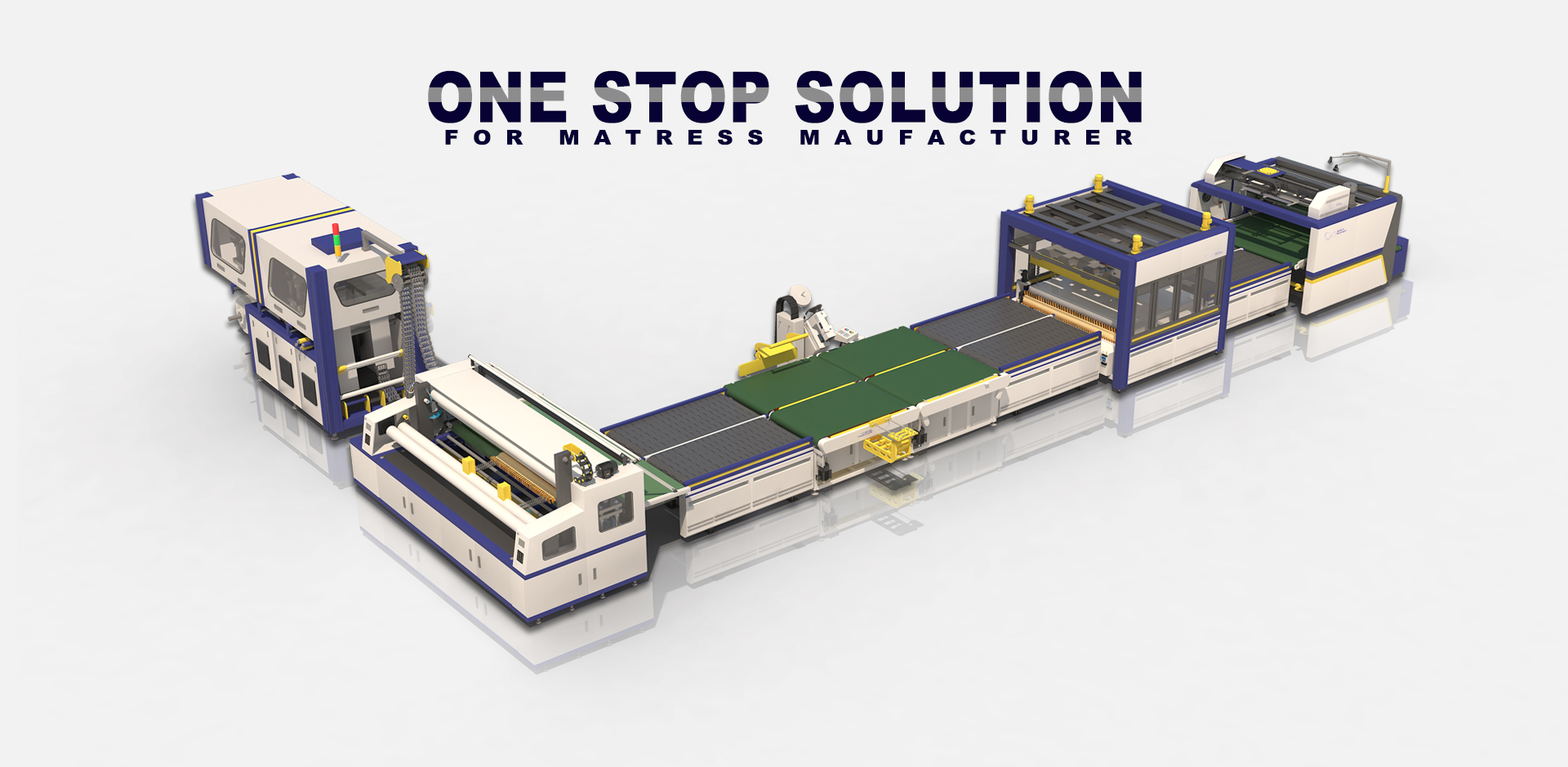
Infinity Mattress Machinery builds the full range of mattress production lines, from foam machines and spring machines to tape-edge and roll-packing. The IF-CR2 is the last mile that makes your export margins work.
Tell us your mattress sizes and target markets. We will calculate your roll-packing savings and container gain, and recommend the right setup.