Our quilting department was fast enough, but the area after quilting behaved like a manual warehouse. Operators were cutting lengths, stacking panels by hand, and trying to keep sewing supplied with the right sizes.
The problem was not only labor. Manual transfer created mixed stacks, size confusion, and random pauses at the sewing line whenever the quilting team changed models or cleared backlog.
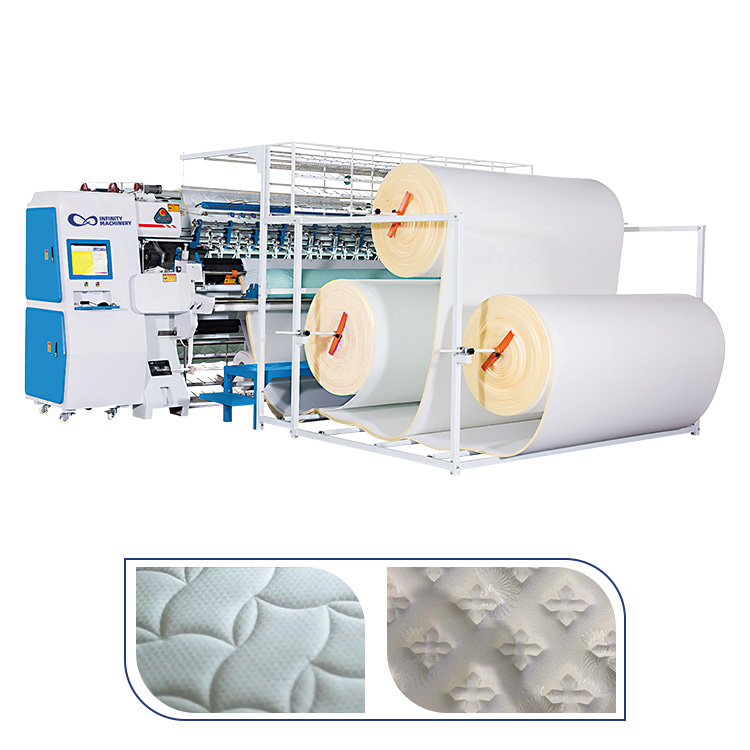
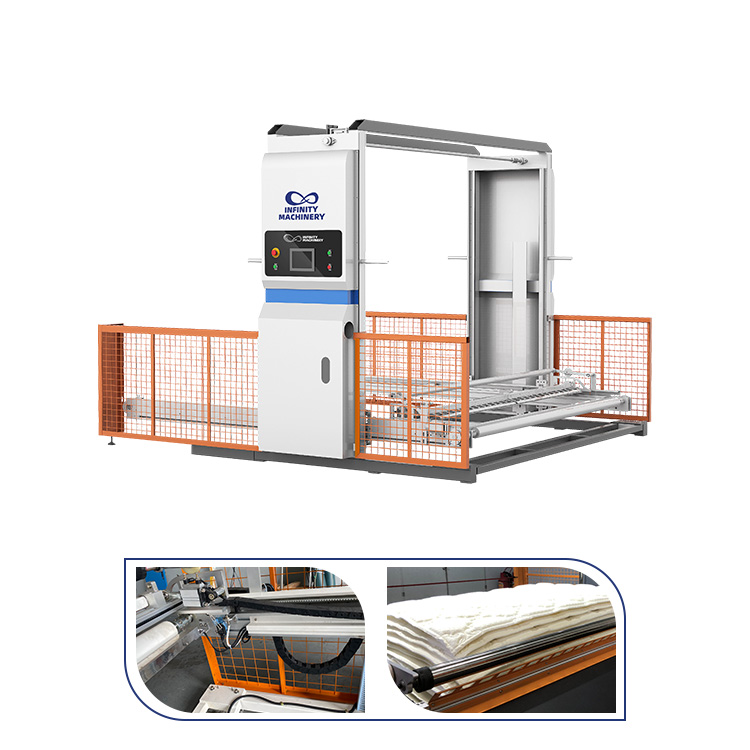
We rebuilt that section around IF-Q-1200 and IF-QFS because we wanted the quilting machine to feed sewing in a predictable way, not just produce more fabric faster.
We tracked eight weeks of production and found that the quilting machine itself was not the limiting step. The real delay happened after quilting, where cut length control, stacking, and transfer to sewing depended on manual rhythm.
That manual zone consumed two workers per shift, occupied too much floor space, and still failed to keep panel families cleanly separated. Sewing operators often waited for the next stack or spent time re-sorting what should already have been prepared.
Once we measured that lost time honestly, the value of IF-QFS became clear. The gain was not abstract automation. It was a direct reduction in handling work between two already-capable departments.
The quilting output from IF-Q-1200 began moving into a defined cut-and-stack routine. Panel lengths became consistent, stack counts became easier to verify, and the handoff to sewing stopped relying on informal operator memory.
We reduced the number of emergency stops caused by downstream congestion because the intermediate area no longer filled unpredictably. That made the whole finishing zone calmer and easier to schedule.
The result was not just higher speed. It was smoother material flow, lower handling errors, and fewer interruptions that used to steal productivity without appearing on the machine report.
We did not evaluate IF-Q-1200 and IF-QFS as isolated machines. We evaluated them as a process decision with implications for labor, scheduling, floor space, and material flow. That matters because a machine that looks expensive in a simple quote often becomes the cheaper choice when hidden operating losses are counted honestly.
Our internal model used only savings we could defend on the shop floor: labor hours removed, rework reduction, lower waste, shorter waiting time, and less schedule padding. We ignored optimistic upside such as new customer wins or premium pricing until the production result was already stable.
That conservative logic made approval easier. When a machine combination still pays back under narrow assumptions, the discussion shifts from whether the project is possible to how soon the factory wants the operational relief.
| Indicator | Before | After |
|---|---|---|
| Labor intensity | High and interruption-prone | Lower and more stable |
| Planning confidence | Padding required | Tighter release possible |
| Rework pressure | Frequent correction | More first-pass output |
| Management attention | Firefighting | Controlled routine |
If your factory is facing the same kind of problem, we would not look at a single machine in isolation. We would evaluate the whole process cell and the next likely upgrade path.
Month one was about proving that IF-Q-1200 and IF-QFS could hold the new routine consistently. The technical result appeared fast, but the real learning was operational: routing work correctly, training the right operators, and preventing the old manual habits from returning.
Months two and three usually determine whether a project is a real line improvement or only a nice startup. That is when supervisors either regain control of the area or fall back into buffers, workarounds, and overtime. In our case, the process held, which is why the savings became repeatable rather than accidental.
| Month | Main result | Comment |
|---|---|---|
| 1 | Process stabilized | Training and routing discipline |
| 2 | Labor pressure reduced | Less waiting and less handling |
| 3 | Schedule confidence improved | Buffers started shrinking |
| 4-6 | Financial proof appeared | Savings became repeatable |
Do not buy this type of equipment because the brochure says the speed is high. Buy it because you can name the exact process pain it removes. If the problem is unclear, the ROI will look magical in the sales meeting and disappointing in the workshop.
I would also recommend separating today’s need from tomorrow’s ambition. The best machine combination is not always the biggest line available. It is the combination that solves the current bottleneck while leaving a realistic path for the next stage of growth.
Finally, calculate the project using the narrowest believable case. If the numbers still work when the assumptions are conservative, then the project is strong enough to survive real factory conditions.
The reason this project worked is that it solved a real process problem rather than chasing speed in isolation. IF-Q-1200 and IF-QFS improved the discipline of the line, which is why the quality, labor, and planning results all moved together.
If you want to compare the right machine combination for your actual output, product mix, and space, this is the kind of decision that should be modeled against your factory realities rather than brochure speed alone.
Tell us your output, product mix, floor space, and labor target. We will help you compare the right process cell and upgrade path.