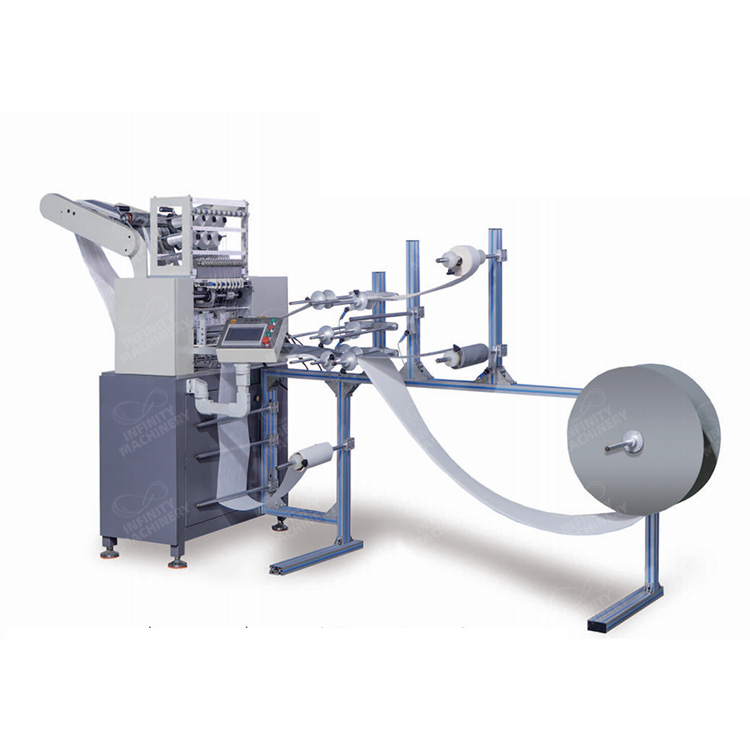
I run a mattress factory focused on mid-range and premium models. Our biggest problem was not lack of orders. It was the moment quilted fabric left the quilting station and moved into cutting and sewing. Decorative patterns looked acceptable from a distance, but once we stacked panels for assembly we kept seeing mismatched borders, drifting dimensions, uneven stitch density, and edge distortion that forced operators to trim by hand. After comparing a standard chain-stitch route with a lock-stitch route, we rebuilt the cell around the IF-QM1-4 Automatic Lock Stitch Quilting Machine and the IF-QC-1 computerized panel cutter. That decision changed the quality profile of our premium line.
The reason we did not choose the fastest possible setup is simple. Speed alone was not our bottleneck. We needed stable stitch formation, cleaner panel geometry, shorter adjustment time at the sewing station, and fewer arguments between quilting operators and cover assembly staff. We kept our high-volume chain-stitch equipment for standard runs, including the IF-Q-1400, but we shifted our higher-margin styles to a different workflow: lock-stitch quilting, automatic panel cutting, and tighter sewing alignment with the IF-SZX1 linear sewing machine.
Seven months after installation, premium panel defects fell by 72%, rework hours were down 38%, fabric waste on those models dropped from 8.4% to 4.9%, and the investment paid itself back faster than the sales team originally forecast. This is the exact logic behind that change, the numbers we used to justify it, and where the cell now fits in our mattress production workflow.
Before this upgrade, we were quilting premium ticking on a setup designed for volume rather than presentation. That gave us acceptable throughput, but our premium line is sold on appearance as much as comfort. Retail buyers look closely at pattern alignment, puff height, edge definition, and the way borders meet top panels. In our old workflow, the quilting looked fine on the roll yet produced too much variation after cutting. The result was a costly chain reaction: sewing operators stretched pieces to fit, supervisors rejected finished covers, and our final inspection team became a manual correction department.
We tracked the problem for twelve weeks. Out of every 1,000 premium mattress sets, 86 had visible panel-related issues serious enough to require rework or downgrade. Forty-one percent of those were dimension mismatch after cutting. Another 34% came from visible stitch inconsistency near corners and border joins. The rest came from fabric handling marks, distorted quilting registration, or delayed corrections that damaged the panel during resewing. When we converted the weekly cost of those issues into money, we were losing roughly $9,480 per month in extra labor, downgraded inventory, scrap, and missed shipment windows.
The hard lesson was that quilting quality could not be evaluated at the quilting machine alone. It had to be judged as a chain: stitch formation, panel cutting precision, stack integrity, transfer to sewing, and the amount of adjustment needed before border closing. That is why we stopped looking for a single hero machine and started looking for a process cell. We reviewed the IF-QFS stacker route as one option, and we also reviewed whether to simply add more people downstream. Neither solved our main issue. We needed better seam stability on premium patterns and more accurate cutting from the start.
| Metric | Old premium process | Target after upgrade |
|---|---|---|
| Panel defect rate | 8.6% | Below 3.0% |
| Fabric waste | 8.4% | Below 5.5% |
| Rework labor per shift | 27.5 hours | Under 18 hours |
| Model changeover | 42 minutes | Under 25 minutes |
| Payback threshold | Not acceptable above 10 months | Preferred below 8 months |
The first question we had to settle was stitch type. Chain stitch is excellent when the goal is stable high-speed output on large volumes of standard patterns. That is why machines such as the IF-Q-1400 computerized chain stitch quilting machine remain valuable in any modern quilting department. But our premium range was suffering at the points where presentation mattered most: visible pattern clarity, panel edge control, and post-cut handling. We needed a seam structure that held its place more firmly when panels were moved, stacked, and aligned in sewing.
That is where the IF-QM1-4 made sense. Lock stitch uses interlocked top and bobbin threads. In practical factory terms, this gave us tighter stitch definition, cleaner decorative presentation on premium ticking, and more confidence that a small stitch failure would not travel through the seam. The machine also fit our strategy of shorter, more frequent premium runs. We do not run 10,000 identical premium panels without interruption. We switch styles, pattern programs, foam builds, and border looks. The IF-QM1-4 gave us better control for that mix.
The decision was not emotional. We ran sample panels through our internal review board: quilting, cutting, sewing, quality, and sales. Sales liked the sharper visual finish. Sewing liked the more stable edge behavior. Quality liked the drop in visible distortion after handling. The only reservation came from production, because a lock-stitch line is not automatically the fastest route. Once we modeled the cost of rework, downgrades, and returns, that objection lost force. We were not buying meters per hour. We were buying sellable premium panels per hour.
The IF-QM1-4 gave us two benefits immediately. First, the premium patterns we sell most often looked more deliberate. Stitch lines sat more cleanly, the loft distribution looked more controlled, and the finished panels photographed better for dealers. Second, our operators stopped compensating manually for inconsistency. On the old process, two experienced operators spent a surprising amount of time adjusting feed, rechecking reference points, and separating borderline rolls from good ones. Once the IF-QM1-4 was dialed in, that sorting work dropped sharply.
We structured the premium line around repeatable recipes. Each model had a saved pattern, stitch setting, fabric combination, and inspection threshold. That matters more than marketing language. A machine earns trust when it becomes predictable across shifts and operators. Within the first month, first-pass quilting acceptance for the premium range improved from 91.4% to 96.8%. By month four, after we stabilized operator routines and matched better cutting sequences downstream, first-pass acceptance reached 97.9%.
What surprised us most was the effect on scheduling confidence. Premium orders used to be padded with extra time because planners expected corrections. After the IF-QM1-4 cell settled in, planners shortened the buffer on premium cover programs from 1.6 days to 0.8 day. That changed customer-facing behavior. Sales could promise tighter ship windows without quietly asking production for miracles at the end of the week.
We measured these changes only on premium panel programs moved to the new cell.
A premium quilted roll is only valuable if it becomes a premium panel. That is where the IF-QC-1 computerized panel cutter proved essential. We had been treating cutting as a simpler task than quilting, but our defect tracking showed the opposite. Once a beautiful quilted roll entered manual or semi-controlled cutting, panel geometry drifted. Corners varied. Border widths needed trimming. Sewing operators improvised. The IF-QC-1 brought panel size and repeatability back under process control.
The improvement was visible in numbers within weeks. Average dimensional deviation on premium top panels fell from plus or minus 3.4 mm to plus or minus 1.1 mm. Waste on the premium programs dropped from 8.4% to 4.9% because layouts became more consistent and recuts became rarer. We also saved time by reducing hand sorting. On the old process, operators would sometimes separate panels by “close enough” and “needs touch-up” piles. That silent inefficiency disappeared when cut quality became dependable.
One more advantage mattered for our mix: model memory. Premium programs change more often than entry-level ones. We do hotel projects, retailer exclusives, and seasonal upgrades. The IF-QC-1 allowed us to store and recall settings with far less friction than our old method. That shortened restart time after interruptions and helped us keep different premium models flowing without building a large WIP buffer to hide instability.
| Metric | Before IF-QC-1 | After IF-QC-1 |
|---|---|---|
| Panel dimensional deviation | ±3.4 mm | ±1.1 mm |
| Fabric waste on premium runs | 8.4% | 4.9% |
| Panels needing hand trimming | 13.2% | 4.1% |
| Model changeover | 18 minutes | 7 minutes |
| Operators required | 2 | 1 |
The real proof of a quilting-and-cutting upgrade shows up at sewing. We route premium panels to the IF-SZX1 linear machine and in some programs to the IF-SB-A2 for specific assembly steps. Before the new cell, sewing was forced to solve problems created upstream. Operators eased fabric, corrected edge drift, and spent too much time aligning components that should already have matched. Once the IF-QM1-4 and IF-QC-1 stabilized the input, sewing productivity improved without any dramatic change to the sewing team itself.
We measured border-to-panel alignment errors on premium covers across 2,400 units before and after the change. The error rate fell from 7.1% to 2.2%. Sewing operators reported less material tension, fewer stop-and-check moments, and more confidence that premium panels would close cleanly on the first pass. That matters not only for labor cost. It changes what the customer sees. The finished mattress looks sharper because the top, border, and seam lines meet without visible compromise.
This is also where line balancing became easier. Because upstream quality became more predictable, we reduced emergency WIP buffers. Finished premium covers no longer needed to accumulate as insurance against quilting or cutting surprises. That freed floor space and made the department calmer. I mention that because equipment ROI is not only about labor minutes. It is also about making the plant easier to manage, plan, and explain.
When we reviewed this investment, we did not load the spreadsheet with optimistic assumptions. We counted only the premium programs moved to the new cell, because that was the narrowest believable case. The capital package included the IF-QM1-4, the IF-QC-1, installation, training, spare consumables, and process tuning during ramp-up. We excluded any upside from attracting new premium customers, even though that later happened.
Our monthly savings came from four buckets. Rework labor fell by about $2,180. Fabric waste dropped by roughly $1,760. Downgrades and scrap fell by approximately $1,940. Schedule reliability and reduced premium shipment delay cost produced another estimated $1,420. That brought the monthly benefit to about $7,300. Against a fully loaded investment estimate of $51,200, our conservative payback landed at 7.0 months. After month five, when the line stabilized more than expected, the practical payback outlook improved further.
| Loaded investment | $51,200 |
| Monthly labor savings | $2,180 |
| Monthly fabric savings | $1,760 |
| Monthly scrap and downgrade savings | $1,940 |
| Monthly schedule-reliability savings | $1,420 |
| Total monthly benefit | $7,300 |
| Conservative payback | 7.0 months |
If your factory is facing the same issue we had, do not shop for a quilting machine in isolation. Think in terms of panel quality flow. We would start with the quilting choice, match it with accurate cutting, and then make sure the sewing stage receives stable inputs. These are the three products we would review first.
Sales samples looked more convincing because quilting definition, panel size, and border matching were more consistent from one batch to the next.
The biggest savings did not come from reducing headcount. They came from cutting the silent labor spent correcting avoidable variation.
Because premium jobs became more predictable, our planners shortened buffers and scheduled small runs with less fear of downstream disruption.
A cleaner, more repeatable finish gave our sales team stronger evidence that premium models truly deserved a higher market position.
Month one was about stabilization. Operators were still learning the logic of the new cell, and engineering was setting standards instead of relying on tribal knowledge. Even so, defect rate was already down to 5.7%. Month two brought the first real confidence jump. Panel dimensions tightened, sewing complaints dropped, and planners started releasing premium work with smaller buffers. By month three, we knew the line would hold because the quality pattern was repeating rather than fluctuating.
Months four to seven delivered the financial confirmation. Premium panel defects settled at 2.4%, rework hours stayed lower without extra pressure from management, and dealers stopped questioning whether certain designs could be produced consistently. That last part mattered. When distributors believe your premium look is stable, they buy with more confidence. We did not include that commercial upside in the payback case, but it strengthened the result in practice.
| Month | Premium defect rate | Rework labor vs baseline | Comment |
|---|---|---|---|
| Baseline | 8.6% | 100% | Old process |
| Month 1 | 5.7% | 81% | Startup and training |
| Month 2 | 4.1% | 73% | Cutting and sewing stabilized |
| Month 4 | 2.9% | 66% | Process discipline improved |
| Month 7 | 2.4% | 62% | Payback achieved |
If your premium quilting line looks busy but still feels unreliable, do not assume the answer is more inspectors or better operators downstream. Start by asking whether your stitch choice matches your product promise. Then ask whether cutting accuracy is good enough for the sewing quality you want. Our mistake for years was treating those as separate departments with separate problems. They were really one quality system.
I would also separate standard and premium logic clearly. For standard models, high-output chain stitch can be the right answer. For premium models, especially where the customer sees and judges the quilting, a lock-stitch route may create more profit even if it is not the fastest route on paper. The combination of IF-QM1-4, IF-QC-1, and a stable sewing stage gave us that distinction.
Finally, calculate ROI using the narrowest credible case. We modeled only the premium programs moved to the cell and ignored future sales upside. That made the decision easier to defend internally. When the numbers still work under conservative assumptions, you are looking at a real manufacturing improvement rather than a presentation deck fantasy.
The reason this upgrade worked is that it aligned the machine choice with the product strategy. We stopped chasing premium quality with a process built for standard volume. The IF-QM1-4 delivered the seam definition and stability our premium line needed. The IF-QC-1 protected that quality by converting quilted rolls into accurate panels. Downstream sewing then became more productive because it received better material, not because we demanded more from operators.
If you are facing recurring premium panel defects, visible pattern inconsistency, or too much rework between quilting and sewing, this is a practical route to evaluate. It is not the only route in mattress manufacturing, but for factories balancing premium presentation with disciplined ROI, it is a very credible one.
Tell us your mattress models, panel sizes, defect rate, and current output. We will help you compare lock stitch, cutting, and sewing options for your actual factory.